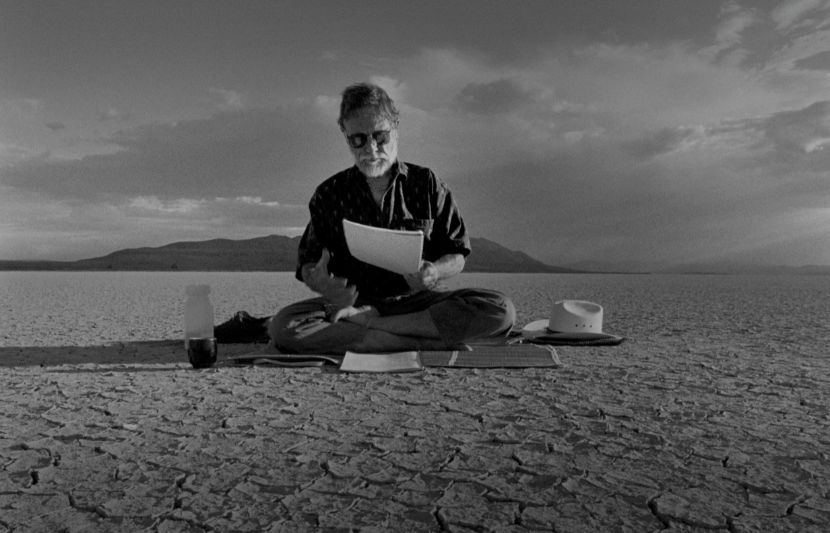
There are those days when you recognize how delightful it is to be where you are. And one of those days unfolded in North Carolina, a delightful day that culminated with an event with friends hosted by the Smoky Mountain Storytellers. I read a nonfiction piece entitled “Murmuration,” a brief story of a miraculous experience on the final evening of a nineteen-day kayak journey down the length of the Connecticut River with my friend Tim.

Murmuration
Swallows gather in the sky. Hundreds of thousands. We are watching.
__________
It is just before sundown, on a late October day. I’m floating on the water with Rebecca and Tim, near the mouth of the Connecticut River, tucked in behind 75 acres of phragmites on Goose Island. The reedy perennial grass is at least head high.
We are here for a murmuration of swallows.
__________
Earlier in the day Rebecca picked us up where the river flows into Long Island Sound. It took us nineteen days to get to these salt-marsh shores—a run of 410 river miles from the Canadian border to the Great Island estuary. When you are tucked into the cockpit of a kayak for over two weeks you experience the river in a particular way. It is a good way to recognize that you live in a watershed––in this case, a river system draining 7.2 million acres, with over 35 major rivers and 140 tributaries feeding the river, and with over 400 communities of people living and working along its main stem.
A river that gathers itself in its upper reaches, amidst rocky and rural farmland between New Hampshire and Vermont; a river that spike-booted log drivers ferried spruce logs hundreds of miles to the southern mills; a river that meanders through the expansive floodplain farms of the Pioneer Valley, where in Northampton, in 1734, the preacher Jonathan Edwards sparked a religious revival; a river that made possible the city of Holyoke, in Massachusetts, one of the early planned industrial hubs, that in its heyday produced over 80% of the writing paper in the United States; and a river that gathers its waters through the tick-infested forests and pastoral estates down river in the state of Connecticut where it spills its rich alluvial sediments into the grassy wetlands and the salty waters of the sea.
__________
There is a lot to learn about a watershed. By trade I’m a professor, and Tim a farrier, both of us curious white colonial settlers, a liberal and a libertarian, both of us hell-bent on deepening our sense of place. Because we are readers, and amateur historians––and have long made our homes in the river valley––we knew that the waters of this river flow through the homeland of Algonquian-speaking peoples—a place the Abeneki call Kwenitekw (KWEN- ee – took), the Long River, or Quinnitukqut (KWEN- ee – took-ut), the long tidal river). But we were astonished to find out that the tidal flow of this long river runs more than sixty miles up its undammed reaches to Hartford: that during the high waters of the spring freshet the river dumps up to 29 billion gallons a day into the Sound, and when the flow has lowered to 4.5 billion gallons a day the tide swing can reach 4 feet.
We learn from a local hydrologist that the Connecticut River provides 70% of the fresh water that flows into Long Island Sound; from a fishery biologist that while the salmon only run in the memory of the river before the dams, the native migrations of anadromous shad and sea lamprey continue below the surface waters; and from a cultural historian that Katherine Hepburn lived near the mouth of the river, in the Fenwick borough of Old Saybrook.
It was Hepburn who memorably described the river as America’s “best landscaped sewer” in the 1965 documentary, “The Long Tidal River.” And it turns out that two years later, in 1967, the Connecticut legislature passed a landmark law to regulate industrial and municipal wastewater. This legislation led, five years later, to the federal Clean Water Act.
This is the river that my wife was told not to swim in as a girl and that is now safe to swim.
__________
On the final day of our journey on the river, I note in my journal, just as the sun dips below the horizon, swallows begin gathering in the sky. Then the swallows begin to descend. Their descent is breathtaking––many hundreds of thousands of birds, filling the sky. Their flight tightens. Dark shapes dip and pivot in the evening light. I look around. Phones and hand-held cameras have dropped. Everyone is watching. The birds begin pouring down like eddies in a river of sky. They disappear into the tall brown reeds.
__________
Roger Tory Peterson, who lived in nearby Old Lyme, nearly missed this murmuration of swallows. He was busy painting. Peterson pretty much invented what today we call “birding.” He moved to the area in 1954, not far from Goose Island, where he set up his studio at 125 Neck Road. And for the next four decades the renowned ornithologist and artist was unaware of the murmuration of swallows. But in the fall of 1994, he learned of the swallows, at the age of 86, two years before his death. Here is what he said in Birdwatcher’s Digest: “In all my long lifetime of birding I have never witnessed a spectacle more dramatic than the twisting tornadoes of tree swallows I saw plunging from the sky after sundown this past October. And this was within four miles of my home near the Connecticut River, where this has probably been going on every October.”
For me, the experience of the murmuration was more miracle than spectacle––a reminder that there are countless miracles unfolding around us every day. It turns out that the miracle of flocking is not fully understood, though scientists have developed models with algorithmic rules of attraction, alignment, and avoidance. I am especially drawn to the vocabulary of the biologists, who describe a murmuration as an “emergent order in a multi-agent social system.”
__________
The idea of emergent orders got me thinking about another kind of murmuration. It is happening right now. I am standing here, you are sitting there: we are agents in an emergent social order, taking shape, in this case, from notes on the page of a river journal. Our murmuration is a gathering in language that, as the Latin murmurare tells us, emerges in the sounds of a bodily, vocal presence. It is the sound of a voice taking shape in the miraculous flight of the mind. Language gathers. It dips and pivots. It descends. A mind organizing itself in the “emergent order” we call form––the words, phrases, and sentences we share.
Swallows gather in the sky. Hundreds of thousands. We are watching.