
For ten years the journal Pedagogy: Critical Approaches to Teaching Literature, Language, Composition, and Culture has distinguished itself as the only profession-wide journal devoted exclusively to teaching in English studies. The journal, founded by Marcy Taylor and Jennifer Holberg, has sustained a professional conversation around teaching and the scholarship produced around it. A winner of the 2001 Best New Journal Award from the Council of Editors of Learned Journals, Pedagogy is celebrating its tenth anniversary.
My work on the journal includes writing book reviews, an essay and since 2005 serving an associate editor of the journal. As associate editor, I am responsible for the book review section in our three issues published each year. I serve as a liaison with book publishers, recruit reviewers, edit individual and roundtable reviews, and work with the authors of longer “Forum” essays by senior teachers.

My most recent contribution to Pedagogy, and to the profession-wide conversation about teaching, is a special issue dedicated to the small college department. As guest editor for the spring 2010 issue I asked ten contributors to foreground the ways the small college departments generate conditions for innovative pedagogy, curriculum development, and the integration of the professional activities of reading, writing and teaching. In my Guest Editor’s Introduction, “Centers and Peripheries,” I introduce the two goals of the special issue: to investigate what might be possible in the small college department as well as to suggest how these possibilities might inspire comparable intellectual work in other professional and institutional contexts. Because the current traditional conception of the discipline has rendered a great deal of the intellectual work of the profession invisible, I contend, we need to talk more about what our colleagues are actually doing outside the doctorate-granting institution. My claim is that representing more fully what we do will help us to move beyond general claims for teaching as a form of scholarship and away from de-contextualized arguments about the value of teaching.
Since graduate school I have been surprised by the parochial discourse of the profession that situates the so-called research institution at the center of intellectual production, value and prestige. Over the years, I have tried to bring people together to talk about the ways we devalue significant intellectual work and to make visible the a more complex system of postsecondary education made up of four-year liberal arts colleges, comprehensive universities, two-year colleges, community colleges, and public and private colleges and universities. As an assistant professor I was fortunate to find at the annual Modern Language Association (MLA) convention colleagues interested in making visible forms of intellectual work in small college departments. After presenting on issues in small college departments for a couple of years, I began organizing and chairing the annual session sponsored by the Association of Departments of English (ADE). At the 2005 convention in Washington, D.C., the session “Graduate Education and the Small College Department” I invited graduate directors from research institutions (U of Wisconsin, Rutgers U, U of Pittsburgh) and small-college faculty (Marywood U, U of the Pacific, and Cornell College). And in 2006, in Philadelphia, I focused the session on the procedures and criteria for tenure and promotion in the small college department. And in 2009 we considered criteria and requirements for earning tenure—specifically how these criteria may have changed or be changing, whether changes (and what changes) would seem more productive and more counter-productive, and how institutional conditions and complexities determine the work of promotion and tenure committees. Have the requirements for publication for tenure and promotion changed in institutions over the past ten years? How do small-college departments define productivity and growth in scholarship and related professional activity? How do small-college departments value scholarship beyond the standard peer-reviewed journals or monograph? How does the apparently necessary specialization in graduate school prepare graduate students for positions where the publication of a monograph is not the requirement for tenure?
My inquiry into the conditions for teaching and learning in small college departments led to an invitation to write a featured “Commentary,” “Where Do You Teach?”, for the fall 2005 issue of Pedagogy and an essay, “Reading, Writing and Teaching in Context” in the book Academic Cultures: Professional Preparation and the Teaching Life (MLA 2008). In both of these essays I consider the debilitating representation of faculty work in terms of research and teaching as separate activities. My argument is that this pervasive subplot in the narrative of the profession is rooted in a representation of faculty work that transcends the local institution and the ways that departments and institutions define intellectual work.
The special issue of Pedagogy dedicated to the small college department is a culmination of many years of work. My hope is that the professional conversation about our intellectual work will continue and that our special issue will inspire others to explore what it means to be primarily a teacher in a community of writing and scholarly exchange.
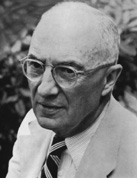 I began writing about American poetry with two peer-reviewed journal articles: one on the poet Denise Levertov and one on William Carlos Williams. In 2004, my work on Williams continued with “Ideas as Forms of Beauty: William Carlos Williams’s Paterson and A. R. Ammons’s Tape for the Turn of Year,” an essay that appeared in the book Rigor of Beauty: Essays in Commemoration of William Carlos Williams. More recently, my work in American poetry and poetics has contributed to the emerging field of ecopoetry. My essay “William Carlos Williams, Ecocriticism, and Contemporary American Poetry” appeared in the book Ecological Poetry: A Critical Introduction. Two additional essays were published this fall: a 10,000 word overview of the life and writing of A. R. Ammons, commissioned by the Dictionary of Literary Biography, and a 10,000 word critical history of the relationship between poetry and ecology that appeared in a multi-volume anthology entitled Reading in Contemporary America. In addition, since 2003, I’ve published shorter reference entries on the American poets William Carlos Williams, Theodore Roethke, Mary Oliver, W. S. Merwin, Gary Snyder, and Denise Levertov. I also regularly review new books of American poetry for ISLE: Interdisciplinary Studies in Literature and Environment. My most recent review is Mary Oliver’s book of poetry Thirst.
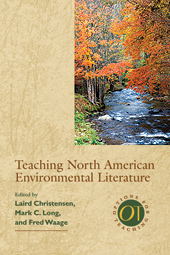 Four years of work with co-editors Laird Christensen and Fred Waage has resulted in the publication of Teaching North American Environmental Literature (MLA 2008). Our book provides a center of access to the range of pedagogical possibilities for teaching environmental literature. The collection includes over thirty contributors and features essays on the environmental literatures of Canada as well as Mexican and Mexican-American environmental literature. The book includes a section for further reading, “Resources for Teaching Environmental Literature: A Selective Guide.” Before my last promotion I published the essay “Education and Environmental Literacy: Teaching Ecocomposition in Keene State College’s Environmental House” that appeared in Ecocomposition: Theoretical and Pedagogical Approaches. This publication has led to a series of publications on environmental writers and ecocriticism. In 2004 I published a 12,000 word entry on John McPhee in Dictionary of Literary Biography: Twentieth-Century Nature Writers: Prose. My essay “Ecocriticism and the Practice of Reading” appeared in the fall of 2006 special issue of the journal Reader: Essays in Reader-Oriented Theory, Criticism, and Pedagogy that I guest edited. Reader is a semiannual publication that generates discussion on reader-response theory, criticism, and pedagogy. My essay, and the special issue, is focused around the relationship between reading and ecological thinking.
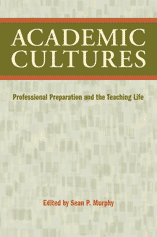 For over ten years I have been writing about the profession of English. As a graduate student, while co-directing the Expository Writing Program at the University of Washington, I co-wrote and published the essay “Graduate Students, Professional Development Programs, and the Future(s) of English Studies” in the journal WPA: Writing Program Administration. Since arriving at Keene State College, my work in this area has focused on the intellectual work of English in particular institutional sites. In 2004, a Keene State College Faculty Development Pool Grant enabled me to travel to the Association of the Departments of English (ADE) Summer Seminar to broaden my perspective as a scholar interested in the profession of English. Moreover, serving for three years as a member (and for one year as Chair) of the MLA Committee on Academic Freedom and Professional Rights and Responsibilities (CAFPRR) furthered my understanding of the general conditions of the field of English studies and the professional lives of teachers and scholars. My subsequent inquiry into graduate training, the professional identity of faculty, and the small college department has been disseminated in a series of publications, book reviews and conference presentations. In 2005 I was invited to write a featured “Commentary” on the small college department, that I titled “Where Do You Teach?”, for the fall 2005 issue of the journal Pedagogy: Critical Approaches to Teaching Literature, Language, Composition, and Culture. And my essay “Reading, Writing and Teaching in Context,” appeared in the book Academic Cultures: Professional Preparation and the Teaching Life (MLA 2008). This essay takes as its subject the representation of faculty work in terms of research and teaching as separate activities. My argument is that this pervasive subplot in the narrative of the profession is rooted in a representation of faculty work that transcends the local institution and the ways that departments and institutions define intellectual work.