This morning I read Michelle Navarre’s “Cleary The Wrong Way to Teach Grammar” in The Atlantic magazine. The essay takes up the question whether grammar lessons must come before writing or the learning of grammar through writing (and reading). Navarre, an associate professor and associate dean at DePaul University’s School for New Learning, notes the decades of study that demonstrate how teaching rules outside of context or use does not work well for most writers.
These kinds of conversations inevitably bring up approaches to teaching writing, and the ways that teaching writing in schools does and does not result in better writing. What we have discovered in more than a decade of work at Keene State College is that developing writers requires a sustained focus on writing—across all four years, and in as many classrooms and fields of study as possible. If we value writing, we need to give students authentic and challenging writing at every turn. This philosophy of teaching writing, it should follow, needs to shape elementary, secondary and post-secondary classrooms. Have a look at another essay in The Atlantic series, Peg Tyre’s 2012 essay “The Writing Revolution” for a case study at New Dorp High School focused on teaching analytic writing, every day, in virtually every class.
Finally, and not incidentally, The Atlantic series includes an essay by a secondary teacher, Andrew Simmons, whose “Facebook Has Transformed My Students’ Writing—for the Better,” offers a first-person anecdotal case for the value of social media in developing skills associated with storytelling and emotional authenticity in personal writing.
Let’s just say your professional title is Professor of English and American Studies, and you happen to have been elected President of the Association for the Study of Literature and Environment (ASLE-US), and you are invited to deliver the Keynote Address at the International Conference on Ecocultural Ethics: Recent Trends and Future Directions, sponsored by the Department of Humanities and Social Sciences, at the Birla Institute of Technology and Science in Goa, India. Perhaps, in addition to your address, “The Ecological Arts: Humanities, Technology, Science,” you would be invited to be part of a featured conference session on ecological learning with a fisheries biologist, a philosopher of science, a community activist, and an expert on wastewater treatment. And let’s say you also chair a session called “Representations of Land and Animals,” and spend your days on campus meeting with research scholars from universities across India to discuss their work in the environmental humanities. How would you approach your visit?
On the dais with professor K. E. Raman, Director of BITS Pilani Goa at the inaugural ceremony, with professor Meenakshi Raman, Dr. Reena Cheruvaleth, and Dr. Rayson K. AlexIf your goal in India was to share with your Indian colleagues recent trends and future directions in ecocriticism and the environmental humanities, you might feature your own project, or talk about methodological or theoretical trends. However if your focus was not on intellectual or theoretical discourse then you might zero in on institutions—and the pressing need for us to work together to change them. In fact you might float the title, “The Ecological Arts,” and use the term ecology to bring together the humanities, sciences, and technology. Then you would lay out your key terms and then connect those key terms to a way of thinking about education before sharing your own efforts, and those of ASLE-US colleagues, who are transforming their intellectual work, disciplines and institutions. Hey, you might even conclude that our current intellectual work, our academic disciplines and institutions, struggle to honor this basic point and that we need to work together to transform our work, and the work of our students, as we meet the new challenges of a rapidly changing world.
Professor Mark with young research scholars from Central University in Pondicherry
So that is what I did. I explained to my audience that one of my projects as the current president of ASLE-US has been designing and building a web site to strengthen how our members share resources, collaborate, as well as engage audiences beyond the academy—from community groups and national organizations to journalists. As part of this work, we have reached out to dozens of our members, and have compiled an archive of video, audio and text commentaries that chronicle the histories and activities of ecocriticism and the environmental humanities. The web site includes an archive of member perspectives on ecocriticism and the environmental humanities delivered for academic audiences. Currently the archive includes University of California Los Angeles professor Ursula Heise’s assessment of the environmental humanities in her 2014 “American Comparative Literature Association’s State of the Field Report”; University of Wisconsin professor Rob Nixon’s keynote address at the Utrecht Edward Said Memorial Conference in 2013 that explores convergences between colonial oppression and ecological degradation, the unequal distribution of environmental resources and risks and conditions of environmental injustice; the University of Texas’s Stacy Alaimo’s primer on science studies and the environmental humanities. The archive has an essay by Julianne Lutz Warren, Senior Scholar at the Center for Humans and Nature, on “Generativity,” and a conversation with Iain MacCalman, professor at the Sydney Environment Institute, in Australia, about the necessary transformation of our intellectual work in the humanities and social sciences in the “anthropocene.” These member perspectives, I concluded, are all pointing to the historical and ethical imperative to transform our intellectual work to address the complicated and complex environmental questions we are facing today.
“The true artist, like the true scientist, is a researcher using materials and techniques to dig into the truth and meaning of the world in which he himself lives. . . .”
-Paul Strand, Letter to the editor of the Photographic Journal 103.7 (1963): 216.
Sixty years ago, in June of 1955, an international symposium on the relationship between the human and the earth was organized by the Wenner Gren Foundation for Historical Research in Anthropology. Convened in Princeton, New Jersey, “Man’s Role in the Changing Face of the Earth” honored George Perkins Marsh’s 1864 book Man and Nature. The symposium brought together seventy participants to further, in the words of the Wenner-Green Foundation President Paul Frejos, an understanding of the human and the earth “by synthesis, transcending the limits of present disciplines or branches of science” (vii). The conference participants, in fact, were chosen not to represent academic disciplines; and, as the symposium unfolded, in the words of one of the organizers, Marston Bates, “less and less was said in defense or in support of a particular disciplinary association” (1132).
Post-monsoon rains in the afternoon near the central coast of Goa, India
One of the conveners of the symposium, Carl O. Sauer, professor of Geography at the University of California, Berkeley, raised the present and future condition of the earth as a principal ethical concern. In the words of Marston Bates, a professor of Zoology at the University of Michigan, and also a co-convener of the symposium, “What sort of world is it that we want, and can we get it?” (1134). In his summary remarks on the proceedings, Bates insisted, “the sciences and the humanities form a false dichotomy, because science is one of the humanities” (1139). The third principal organizers of the symposium, Lewis Mumford, reminded the participants that “within the limits of earth’s resources and man’s biological nature, there are as many different possible futures as there are ideals, systems of values, goals and plans, and social, political, educational, and religious organizations for bringing about their realization” (1150).
Forests and rice fields between the coast and the interior, central Goa, India
In linking ideals and systems of values to collective organizations and institutions, Mumford suggests a direction for one of my primary fields of work, ecocriticism and the environmental humanities. In preparing a keynote address that I delivered in Goa, India, this month I found myself reading in the two-volume proceedings of the International Symposium edited by William L. Thomas, Jr. in collaboration with the principal organizers of the symposium, Carl O. Sauer, Marston Bates, and Lewis Mumford, a historian, philosopher and literary critic. The Princeton Symposium reminded me of the challenges we face when ideals and systems of values run up against less agile organizations and institutions.
With colleagues and friends on an afternoon outing in Goa
Since at least the publication of David Orr’s important 1990 book Ecological Literacy: Education and the Transition to a Postmodern World, those of us who work in the environmental humanities have been aware of how individual research agendas and narrow professional incentives do not directly address ecological literacy or sustainability. Orr makes a case that our individual work as research scholars will and should continue. But he is convinced that this work holds less promise in addressing the global predicament of environmental crisis. In essays with titles such as “The Problem of Education,” “What is Education For?” and “Place and Pedagogy,” Orr argues that our current ecological crisis is associated with a failure of education. We face a moral and the ethical obligation, he concludes, to rethink our professional activities as well as to transform the institutions where we work.
View from the guest house, BITS Pilani Goa
Why is this rethinking so difficult to do? In my recent keynote address at the Birla Institute of Technology Pilani Goa, I suggested to the international gathering that we need more activism within our places of work, as new kinds of interdependence are increasingly a feature of our educational institutions. In the United States, for example, professors and students are designing and implementing curricular models that emphasize collaboration across disciplines and fields of study—from applied and problem-based learning to service learning initiatives and projects involving students, teachers, and local citizens or community groups. In Goa, I encouraged my audience to imagine new ways to integrate ecological, ethical and social contexts in the work of the humanities. I called on the words of a colleague, and former president of ASLE, Ursula Heise, who argues that the environmental humanities by definition “seeks to respond to the call for new institutional formations to correspond to innovative kinds of knowledge. . . [and] also to translate humanistic research more effectively into the public sphere” (“Comparative”). And yet I cautioned that transformations of academic programs and institutions requires valuing this work—among our peers, in our disciplinary associations, as well as in faculty promotion and retention standards. For it is easy to say that our activities are constituted in socially constructed systems, and that our activities can reconstitute those very systems. It is much more difficult to do.
In preparing my remarks for BITS Pilani Goa, I learned that the Birla Institute was founded by the industrialist Ghanshyam Das Birla who voiced a broad and progressive approach to education. “What do we propose to do here?” he asked. “We want to teach real science, whether it is engineering, chemistry, humanities, physics or any other branch.” The next generation of the Birlas speak in similar language. Here is Basant Kumar Birla echoing the same educational ethos. “For a rich and full life, interest and involvement in Fine Arts, Music, Literature, Social, Cultural and Spiritual activities are essential.” And Dr. Sarala Birla, the wife of Basant Kumar—and daughter of activist and writer Brijlal Biyani—Education is a meaningless ritual, unless it moulds the character of students and imparts in them a strong sense of values.”
In my keynote that opened the conference I asked the hundreds of participants to consider recent trends and future directions in “ecocultural ethics” as intellectual work in our shared study of environmental issues and problems. I shared a few examples of innovative collaborations with students, academic colleagues and community-based groups: faculty and students conducting research together, often by taking the campus or local community as a site for the inquiry (a pedagogical model, by the way, that responds well to the call for surveys of employers and business leaders—in the US and in The Times of India that I read in Mumbai—for the human skills of thinking well, communicating effectively, collaborating, and persuasion; programs, centers, and institutes in which faculty are working on projects not limited by disciplinary, methodological or epistemological differences; and technology initiatives designed to build resources for academics, journalists, and the members of the public.
Dinner following the conference on the edge of the Arabian Sea
We then talked, in the discussion period and throughout the conference, about comparable projects and initiatives in India. One of the research scholars was inspired by my talk and invited tribal people to the BITS campus for his presentation. And later, during an evening out with colleagues, I learned more about the generative work of one of the conference organizers (who is collaborating with my English colleague Rayson Alex on the natural and cultural history of a bird sanctuary near Panjim) Solano Jose Savio Da Silva, who works in Development Studies and Political Science.
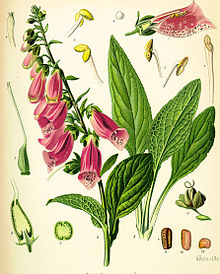
From Kohler’s Medicinal Plants, a rare medicinal guide published by Franz Eugen Köhler in 1887 in three volumes.
Strigidae: A Journal of Undergraduate Writing in the Arts and Humanities
About a year ago I began working with my colleague Kirsti Sandy on a peer-reviewed online journal dedicated to publishing the written work of undergraduate students in the arts and humanities. And this winter we launched the journal Strigidae. The journal welcomes submissions of writing in the disciplines, creative nonfiction, poetry, and fiction. We will also publish clips of musical, dance, or theatrical performances and original artwork with accompanying artists’ statements.
Strigidae, of course, refers to the largest of the two families of owls (the other is Tytonidae) that live in terrestrial habitats across the world. I came up with the name of the journal when I was thinking about the association of the owl with the Greek goddess Athena and wisdom, but also the understanding of the owl as a nocturnal messenger, a symbol of illness, or a harbinger of death. A suggestive symbol for a journal committed to the exchange of artifacts and ideas, we agreed. The owl happens to be the mascot of Keene State College as well.
The special inaugural issue, “Written Bodies/Writing Selves,” is now available in the Mason Library’s Digital Commons. The second issue of Strigidae will appear in 2015. A call for papers will be circulated this spring.
The Aspect Magazine Project
Another project on which I continue working with students is the Digital Archive of Aspect Magazine. This fall I added a series of Project Links, including a Description and History, a Project Overview, Information about the editorial process, and a supplemental document “Remembering Ed Hogan.” I am looking forward to building the archive over the next few years as part of my upper-level courses in English and American Studies.
ASLE.org
As the President of the Association for the Study of Literature and Environment (ASLE) I was one of the project directors that created a new web site for our international association. My work involved working with a team of web developers we hired to design the site, the Managing Director of our Association, Amy McIntyre, and a small group of ASLE colleagues. I spent many hours of my sabbatical leave writing content, soliciting and editing member and project profiles, course profiles, and helping to represent a broad vision for interdisciplinary work in the “ environmental humanities.” I drafted a New Mission Statement for the association that was subsequently approved adopted by the Executive Council, a Vision and History, and a Message to Members. I continue to work with our members to create new course and member profiles. The most recent is a Profile of Robert M. Thorson, University of Connecticut Professor of Geology and Affiliated Faculty at the Center for Integrated Geosciences.
“Something startles me where I thought I was safest”
Walt Whitman, “This Compost”
It is exciting to be a professor of English right now: for the archive of materials we use in our professional lives has undergone (and is undergoing) fundamental and lasting change. The conditions for literary production and reception are being radically transformed and the work of teaching and research are, as a result, changing. While scholars will necessarily travel to libraries for research, scholars and their students now have access to (and, in a number of cases, are building) an expanding archive of materials that were only a decade ago only available to those with the resources and time to travel to research libraries or to more modest holdings in public or private collections.
For a decade my students and I have been using the Walt Whitman Archive, an electronic library of written materials, including the six editions of Whitman’s major work, Leaves of Grass. The archive makes accessible Whitman’s notebooks, manuscript fragments, prose essays, letters, and journalism, as well as the ongoing historical and critical commentary on his work. So, for example, my students can access all the volumes of Horace Traubel’s With Walt Whitman in Camden and we can easily call up page images of Leaves of Grass Imprints in class. Students reading in the historical commentary on Whitman’s writings and current criticism, moreover, now have access to electronic versions of essays and more than twenty full-length books. The co-editors of the site, Kenneth M. Price (University of Nebraska-Lincoln) and Ed Folsom (University of Iowa), have created a beautiful thing.
Also, in my American Studies courses, the Library of Congress web portal that supports the Library’s mission “to support the Congress in fulfilling its constitutional duties and to further the progress of knowledge and creativity for the benefit of the American people” has helped my students do much more interesting work with a greater range of materials and artifacts. Finally, my colleague at the University of New Hampshire, Siobhan Senier, is building a digital archive/anthology of materials, Writing of Indigenous New England, with the help of students, tribal historians, and local historical societies. you can learn more about this work at Siobhan’s Indigenous New England Literature site.
Then, this year, I became aware of two new projects that have, to be honest, startled me. The first, more useful to me in thinking more clearly about the fundamental changes that are taking place in my professional field is the monograph Literary Studies in the Digital Age: an Evolving Anthology ,a part of the MLA Commons project. Here is the description of the anthology by the editors:
We began the process of creating this anthology with the intention of providing a primer to core tools and techniques for computational approaches to literary studies. Yet, since literary studies represents a confluence of fields and subfields, tools and techniques, and since computational approaches come from a great variety of sources, it became clear that any primer would have to be dynamic and capable of incorporating a rich and growing array of methodologies.
What is interesting is that the anthology is evolving using the tools of social computing made possible by web 2.0 technologies. In their Introduction, Introduction, Kenneth M. Price and Ray Siemens make the following claim:
The field of literary studies is being reshaped in the digital age. Texts have acquired a new kind of malleability, and they are often encountered in large aggregations, allowing for a scale of research far different from that in the past. At the same time, new possibilities as well as limitations for publishing are changing how, what, and to whom texts are disseminated. These changes require us to reexamine assumptions and to adopt altered research methodologies.
The introduction is worth reading. It can help to moderate the rhetoric that surrounds what some have called the digital turn. They return to 1963 and the founding of the Centre for Literary and Linguistic Computing at Cambridge University by Roy Wisbey. They also mention the period between 1966–78 when professional organizations were established and publications developed to explore possibilities of using computers in the humanities. They call attention to Computers and the Humanities (1966), the Association for Literary and Linguistic Computing (ALLC, 1973), and the Association for Computers and the Humanities (ACH, 1978).
The other project is more ambitious, and delightfully so: The Digital Public Library of America is working to make available (the beta version launches April 18 2013) an enormous amount of archival materials. The material and conceptual implications of this project are staggering. The blog entry called “What is the DPLA?” is a helpful place to start. There is also a very good overview of the conception of the project in the April 25 2103 edition (vol. LX no.7) of The New York Review of Books by Robert Darnton.
To take just one example of a DPLA “service hub”: The Mountain West Digital Library (MWDL) is a search portal for digital collections about the Mountain West region with free access to over 700,000 resources from universities, colleges, public libraries, museums, historical societies, and government agencies, counties, and municipalities in Utah, Nevada, and other parts of the U.S. West. The MWDL will help to accelerate the preservation of materials in these local sites while reaching out to provide access to those interested in the mountain west. For someone who teaches at a small, centrally isolated liberal arts college, the materials available in the Mountain West Digital Library collections will give me the capacity (and help me imagine) new ways to do my own research as well as help me teach courses using primary documents that would otherwise be unavailable to my students.