Browse Category

Digital Humanities

Democratic Spaces

From the excitement of the NAPLA project in the fall of 2016 to the challenges of the Open Space of Democracy in the spring of 2017—a year of teaching and learning on which to continue building.

In the spring of 2017 my classroom work centered on a new course for American Studies students, The Open Space of Democracy. The idea for the course emerged from a line in the amazing prose essay by the nineteenth-century writer Walt Whitman, “Democratic Vistas,” in which he writes, “democracy is a great word, whose history, I suppose, remains unwritten, because that history has yet to be enacted.”

Everything unfolded from there—and it was a good thing, too, as the very idea of democracy was once again (and remains) at stake. So my students and I got to work in January tracing Whitman’s supposition from the formative ideas about democratic culture that emerged in the United States in the nineteenth century to the debates in the twentieth century about art and public engagement that arose in response to John Dewey’s ideas about what he called “creative democracy,” in writing by Horace Kallen, Muriel Rukeyser, James Baldwin, Adrienne Rich, Terry Tempest Williams, and in recent theories and practices of socially engaged art.

The reading, class activities, and writing were guided by Terry Tempest Williams, who makes a case in The Open Space of Democracy that democracy “depends on engagement, a firsthand accounting of what one sees, what one feels, and what one thinks, followed by the artful practice of expressing the truth of our times through our own talents, gifts and vocations.” Practicing the scholarly methods humanists use to work with cultural materials, students contributed to the Aspect Magazine Project in the Keene State College archives. The students designed an individual research project using primary materials, and library-based and digital archives. This process is documented on the course site, particularly in a post from the course site, Roads to Take.

Students further developed their research experience and methods by defining, organizing, and elaborating the significance of their literary and cultural materials in the public domain by contributing to the project site Democracy + Culture.

We designed this project to make visible students thinking through the problem of defining, building, and sustaining a democratic culture, and one of the students produced a video trailer” for the course that will offer one point of inquiry into the intellectual work that I believe should be central to the public liberal arts.

Caution: students at work in the Mason Library archive at Keene State College

NAPLA Project

The year I began graduate school at the University of Washington the department of English began the Computer-Integrated Courses (CIC) Program. The idea was that students in 100-level writing courses would benefit from new learning technologies. From the inception of the Computer-Integrated Courses (CIC) program in 1990, the program’s philosophy was built around “the idea that the computer has become a ‘natural’ part of the reading, writing, research, and critical thinking processes.”

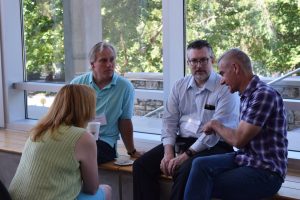
Meeting with co-faculty member Cole Wilcox and Project directors Jeff McClurken and Ellen Homes Pearson at a summer 2016 COPLAC Digital Research Faculty Development Seminar at the University North Carolina Asheville, North Carolina

Sixteen years later this idea continues to shape my teaching and pedagogy. In the fall of 2016 I offered a digital humanities course called “Public Access and the Liberal Arts A Narrative History.” Designed and co-taught with Dr. Cole Wilcox, professor of English at Truman State University, the course enrolled students from the University of North Carolina Asheville, The State University of New York (SUNY) Geneseo, and Keene State College.

The idea for this course was born in a COPLAC Digital Humanities Workshop at the University of Mary Washington that included faculty from Sonoma State, University of Montevallo, USC Aiken, Midwestern State, and Truman State. Our course documented the 1944 G.I. Bill and public access to higher education and, later, increasing public access to the liberal arts. The students documented the experiences of students, alumni, staff and faculty at the campuses at which they were studying and used digital technologies to capture the history and the prospects of the public liberal arts.

Keene State College story of Abby Shepherd’s project on the Women of Keene State

Our class met synchronously on Tuesday and Thursday (EST) from 2-3:20. The students worked in teams to build an online archive of oral histories by alumni, faculty, staff, and current students— layered, web-based narratives that include audio and video stories, images, maps and timelines, and documentary evidence of their home campus.

If you are interested in one version of the idea that digital technologies have become part of the reading, writing, research, and critical thinking processes, have a look at our course site, Public Access and the Liberal Arts: A Narrative History, and the Student Sites:

Foundations of Knowledge at SUNY Geneseo
UNC Asheville: An Educational Narrative
The Women of Keene State

You might also have a look at the full College Profile of Abby Shepherd.


Digitalis

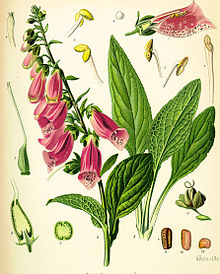
220px-Digitalis_purpurea_Koehler_drawing
From Kohler’s Medicinal Plants,  a rare medicinal guide published by Franz Eugen Köhler in 1887 in three volumes.

Strigidae: A Journal of Undergraduate Writing in the Arts and Humanities

About a year ago I began working with my colleague Kirsti Sandy on a peer-reviewed online journal dedicated to publishing the written work of undergraduate students in the arts and humanities. And this winter we launched the journal Strigidae. The journal welcomes submissions of writing in the disciplines, creative nonfiction, poetry, and fiction. We will also publish clips of musical, dance, or theatrical performances and original artwork with accompanying artists’ statements.

Strigidae, of course, refers to the largest of the two families of owls (the other is Tytonidae) that live in terrestrial habitats across the world. I came up with the name of the journal when I was thinking about the association of the owl with the Greek goddess Athena and wisdom, but also the understanding of the owl as a nocturnal messenger, a symbol of illness, or a harbinger of death. A suggestive symbol for a journal committed to the exchange of artifacts and ideas, we agreed. The owl happens to be the mascot of Keene State College as well.

The special inaugural issue, “Written Bodies/Writing Selves,” is now available in the Mason Library’s Digital Commons. The second issue of Strigidae will appear in 2015. A call for papers will be circulated this spring.

The Aspect Magazine Project

Another project on which I continue working with students is the Digital Archive of Aspect Magazine. This fall I added a series of Project Links, including a Description and History, a Project Overview, Information about the editorial process, and a supplemental document “Remembering Ed Hogan.” I am looking forward to building the archive over the next few years as part of my upper-level courses in English and American Studies.

ASLE.org

As the President of the Association for the Study of Literature and Environment (ASLE)  I was one of the project directors that created a new web site for our international association. My work involved working with a team of web developers we hired to design the site, the Managing Director of our Association, Amy McIntyre, and a small group of ASLE colleagues. I spent many hours of my sabbatical leave writing content, soliciting and editing member and project profiles, course profiles, and helping to represent a broad vision for interdisciplinary work in the “ environmental humanities.” I drafted a New Mission Statement for the association that was subsequently approved adopted by the Executive Council, a Vision and History, and a Message to Members. I continue to work with our members to create new course and member profiles. The most recent is a Profile of Robert M. Thorson, University of Connecticut Professor of Geology and Affiliated Faculty at the Center for Integrated Geosciences.

Digital Compost

“Something startles me where I thought I was safest”

Walt Whitman, “This Compost”

It is exciting to be a professor of English right now: for the archive of materials we use in our professional lives has undergone (and is undergoing) fundamental and lasting change. The conditions for literary production and reception are being radically transformed and the work of teaching and research are, as a result, changing. While scholars will necessarily travel to libraries for research, scholars and their students now have access to (and, in a number of cases, are building) an expanding archive of materials that were only a decade ago only available to those with the resources and time to travel to research libraries or to more modest holdings in public or private collections.

For a decade my students and I have been using the Walt Whitman Archive, an electronic library of written materials, including the six editions of Whitman’s major work, Leaves of Grass. The archive makes accessible Whitman’s notebooks, manuscript fragments, prose essays, letters, and journalism, as well as the ongoing historical and critical commentary on his work. So, for example, my students can access all the volumes of Horace Traubel’s With Walt Whitman in Camden and we can easily call up page images of Leaves of Grass Imprints in class. Students reading in the historical commentary on Whitman’s writings and current criticism, moreover, now have access to electronic versions of essays and more than twenty full-length books. The co-editors of the site, Kenneth M. Price (University of Nebraska-Lincoln) and Ed Folsom (University of Iowa), have created a beautiful thing.

Also, in my American Studies courses, the Library of Congress web portal that supports the Library’s mission “to support the Congress in fulfilling its constitutional duties and to further the progress of knowledge and creativity for the benefit of the American people” has helped my students do much more interesting work with a greater range of materials and artifacts. Finally, my colleague at the University of New Hampshire, Siobhan Senier, is building a digital archive/anthology of materials, Writing of Indigenous New England, with the help of students, tribal historians, and local historical societies. you can learn more about this work at Siobhan’s Indigenous New England Literature site.

Then, this year, I became aware of two new projects that have, to be honest, startled me. The first, more useful to me in thinking more clearly about the fundamental changes that are taking place in my professional field is the monograph Literary Studies in the Digital Age: an Evolving Anthology ,a part of the MLA Commons project. Here is the description of the anthology by the editors:

We began the process of creating this anthology with the intention of providing a primer to core tools and techniques for computational approaches to literary studies. Yet, since literary studies represents a confluence of fields and subfields, tools and techniques, and since computational approaches come from a great variety of sources, it became clear that any primer would have to be dynamic and capable of incorporating a rich and growing array of methodologies.

What is interesting is that the anthology is evolving using the tools of social computing made possible by web 2.0 technologies. In their Introduction, Introduction, Kenneth M. Price and Ray Siemens make the following claim:

The field of literary studies is being reshaped in the digital age. Texts have acquired a new kind of malleability, and they are often encountered in large aggregations, allowing for a scale of research far different from that in the past. At the same time, new possibilities as well as limitations for publishing are changing how, what, and to whom texts are disseminated. These changes require us to reexamine assumptions and to adopt altered research methodologies.

The introduction is worth reading. It can help to moderate the rhetoric that surrounds what some have called the digital turn. They return to 1963 and the founding of the Centre for Literary and Linguistic Computing at Cambridge University by Roy Wisbey. They also mention the period between 1966–78 when professional organizations were established and publications developed to explore possibilities of using computers in the humanities. They call attention to Computers and the Humanities (1966), the Association for Literary and Linguistic Computing (ALLC, 1973), and the Association for Computers and the Humanities (ACH, 1978).

The other project is more ambitious, and delightfully so: The Digital Public Library of America is working to make available (the beta version launches April 18 2013) an enormous amount of archival materials. The material and conceptual implications of this project are staggering. The blog entry called “What is the DPLA?” is a helpful place to start. There is also a very good overview of the conception of the project in the April 25 2103 edition (vol. LX no.7) of The New York Review of Books by Robert Darnton.

To take just one example of a DPLA “service hub”: The Mountain West Digital Library (MWDL) is a search portal for digital collections about the Mountain West region with free access to over 700,000 resources from universities, colleges, public libraries, museums, historical societies, and government agencies, counties, and municipalities in Utah, Nevada, and other parts of the U.S. West. The MWDL will help to accelerate the preservation of materials in these local sites while reaching out to provide access to those interested in the mountain west. For someone who teaches at a small, centrally isolated liberal arts college, the materials available in the Mountain West Digital Library collections will give me the capacity (and help me imagine) new ways to do my own research as well as help me teach courses using primary documents that would otherwise be unavailable to my students.

Professors, Students, Blogs

Last semester I was invited to present my thoughts at a brown bag lunch on the subject of blogging. My talk,”Why do Professors Blog?” began with a confession that I had no idea how to answer the question posed in my title. However I did go on to explain my modest experiments with the uses of blogs.

I began keeping a blog during my sabbatical last year in India. The occasional work of writing about what we were doing and seeing as temporary residents–where we were traveling, what we were seeing, and what I was reading and thinking, in conjunction with images I was gathering–proved to be productive for me in a number of ways. The inspiration for the blog I set up in India, The Far Field, was inspired by my friend and colleague L., whose ongoing practice as a writer has made extraordinary use of the place blog.


As it turned out, a blog designed to give friends and family members a better feel for what we were doing helped me experience the reflective practice of place blogging I had long admired by L., whose Hoarded Ordinaries led me Tim Lindgren’s dissertation and related research material on place blogging completed at Boston College in April 2009. Lindgren’s study examines the emergence of place blogging as a genre of writing that can be used to deepen a sense of place and to share local knowledge.

I’m interested in how we use language and symbols to mediate our relationship with the world around us. I am also interested in how these necessary mediations offer forms of attention that are potentially instructive, even transformative. My practice writing a place blog (now unfolding in a subscription-only blog for my extended family) led me to new questions about how blogs are facilitating new forms of writing and the uses to which this writing might be put.

First I transformed my professional web site into a blog. The intent of what I am doing right now (or more precisely what you are doing right now in reading what I did) is to make visible the intellectual work I do as a college professor. The occasional writing I do here offers me a space to consider more fully my professional activities. What is more, it provides a potentially useful space for colleagues and friends, as well as current and prospective students, to glimpse some of the work I am doing.

Another experiment with blogging is unfolding as part of a collaborative project I began with the independent scholar John Tallmadge. The Staying Alive project began in the spring of 2006 with a series of extended conversations about the promises and perils of academic life. Our conversations led to a workshop for academic professionals at the Biennial Conference of the Association for the Study of Literature and Environment in Spartanburg, South Carolina, in the summer of 2007, and in Victoria, British Columbia, in the summer of 2009. Our subsequent conversations about the challenges of academic life with colleagues at colleges and universities across the country have suggested the need for a blog devoted to the difficult work of sustaining an emotionally, ethically, and spiritually healthy life in academia—no matter what happens.

Last but not least I am thinking pedagogically. How might the blog be used to help develop student writers? While I have yet to use the blog as a medium for student writing in a class, I am working independently with two students who are using blogs. The first student is working on an independently designed major, Biology and Writing. This student is seeking to grow as a biologist and as a writer with the post-graduate goal of conducting research and writing for a scientific journal and writing creative non-fiction biology. Her blog “Creative Biology”  is a remarkable example of the ways a blog mighthelp a student writer with academic study. The second student and I designed an internship in American Studies, “The Ecology of the New England Garden,” that would offer her the opportunity to reflect on a summer and fall experience working for a local professional horticulture and landscape design firm.  Her blog Regional Roots has been integral to the internship experience and will culminate, if all goes as planned, in a published piece of writing in a local environmental journal.

These two examples have me looking farther ahead to the possible applications of blogs in the teaching of college writing. Colleagues at other institutions are actively involved in this work and I will surely have more to say about the use of blogs in forthcoming posts.

  • 1
  • 2