Browse Category

Environmental Humanities

Open Education and ASLE

The things which are dear to men at this hour are so on account of the ideas which have emerged on their mental horizon, and which cause the present order of things as a tree bears its apples. A new degree of culture would instantly revolutionize the entire system of human pursuits.

-Ralph Waldo Emerson, “Circles”

In 2013 and 2014 the Association for the Study of Literature and Environment (ASLE) dedicated energy and resources to building a new web site as part of a renewed focus on the digital strategy of the association. We worked from the visionary digital work of Dan Phillipon and built a new web site as part of a more comprehensive digital strategy for the association.

The web site of the Association for the Study of Literature and Environment (ASLE) in 1999

Earlier that year, in my role as president of ASLE, I collaborated with the managing director of our association, Amy McIntryre, on a comprehensive review of our strategic plan. The 2014 Strategic Plan mapped out our continued work as an open and engaged community of scholars in a new mission statement for our association: “The mission of the Association for the Study of Literature and Environment (ASLE) is to inspire and promote the work of scholars, educators, students, and writers in the environmental humanities and arts.” Among the revised goals we included outreach through member collaboration and public dialogue; the promotion of equity, diversity, inclusion, and accessibility; and facilitating the public dissemination of member projects and expertise.

After two years of work I announced in my President’s column the launching of our site and outlined some of the opportunities the new web site would present the members of our association:

President’s Update

In addition to launching the new web site we established a digital strategies committee to guide ASLE’s efforts to facilitate the public dissemination of member projects and expertise. More recently, as a continuing member of the ASLE digital strategies committee, I proposed a working group to explore the possibilities of open education and pedagogy in our ASLE community.

The home page of the ASLE web site in 2018

The transformative possibilities of open pedagogy, learning, and resources offer a productive provocation to the members of ASLE as the landscape of higher education continues to change. As public support for higher education continues to ebb we should be reexamining all that we do in our various roles on college and university campuses, in our secondary school classrooms, and our communities of practice. We need to take our advocacy talk for a walk.

One way to do this is to explore open education and pedagogy in our ASLE community. For those less familiar with the emergence of open there are useful definitions in circulation. Open Educational Resources (OERs) are materials shared in the public domain under an intellectual property license that allows their free use and re-purposing by others. These educational resources might include individual and collaborative research, course materials and/or modules, textbooks, videos and media projects, to name a few.

Open pedagogy may align especially well with the mission and values of ASLE. At the same time the values and practices of of open pedagogy-with roots in feminist and critical pedagogies-offer a productive provocation for members of our association whose intellectual work is channeled through narrower disciplinary conversations and artifacts such as monographs that create a buzz but most often in more isolated intellectual hives.

So what might be the connections between academic institutions, open pedagogy and learning, and environmental advocacy? Here are the guiding questions I drafted for the workgroup:

How might members of the Association use open education to move our teaching and research activities into communities outside the academy?

How might ASLE offer undergraduate and graduate students opportunities to create and access OERs as well as promote student agency in intellectual communities within and beyond their home institutions?

How might OERs create new partnerships with nonacademic stakeholders as we continue to work on common challenges and projects in the environmental arts and humanities?

In their recent Message from the Co-Presidents, ASLE members Stacy Alaimo and Jeffrey J. Cohen frame environmental humanism as environmental activism. “We study, write, compose and create because we care about issues like biodiversity, environmental justice, survival in a time of endemic precarity and global catastrophe, and the effects of climate change on humans and nonhumans alike,” they write. Wicked problems such as these do not have easy solutions, of course, though they “have faith that widened community is our best way forward.” This is useful language, I believe, to guide us in where the extraordinary labor of the environmental humanities. But how do we widen the community? How do we work to unsettle the personal and disciplinary and institutional disincentives to intellectual work that widen the community?

For the past two days I have been at the University of New Hampshire at the annual Academic Technology Institute. During the gathering my friend, biology colleague, and collaborator Karen Cangialosi presented a keynote talk on open education and advocacy.
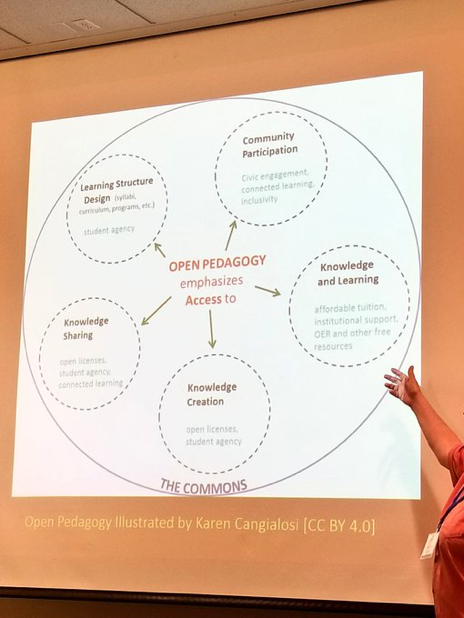
One of Karen’s central claims was that access and agency should be at the core of our work with our students and that the open education movement should refocus academic work on the commons. In the illustration above, Karen emphasizes student agency through course design, knowledge creation, and connected learning, as well as connected learning, community participation, and inclusivity.

The use of Open Educational Resources (OER)—and the practices of Open Pedagogy—connects academic labor to the wider public and in turn improves access to education. Teaching and learning in the open is about connecting students to a larger world and to making the process of education more transparent and accessible. With roots in critical pedagogy, open pedagogy values students constructing their own learning process; and, as another colleague writes, practitioners of open pedagogy seek to empower students “while actively critiquing and confronting the industrial and corporate approach of co-opting and packaging ‘teaching technology’ to turn students into consumers.” Instead, teachers and students build ways to leverage the Open web for discovery, creativity and analysis, as well as dialogue with the wider public.

Karen’s advocacy work is part of an ecology of open pedagogy that is to my mind one of the ways ASLE can expand its circle. What are the opportunities for members of ASLE to further its commitments to sharing and contributing knowledge, the public humanities, service learning projects, creating and displaying public art, and engaging our students with local environmental problems? The first answer to that question is gathering the ongoing work that exemplifies the activities already unfolding in what I might call here the ASLE ecology of open.

Open education takes many forms. Below are a few examples of work already happening in ASLE that I hope will expand the scope of our charts: creating OERs; building project sites for education, research, and public engagement; creating course sites on the open web to promote digital identity, fluency, and citizenship.

Creating OERs This can be on OER Commons  or OpenStax, by using an open-source publishing platform like Press Books, or engaging with the Rebus Community whose members believe that educational materials for every subject should be a free and open public resource. One example of this kind of work is a resource that my colleague at Plymouth State University created (with her students) The Open Anthology of Early American Literature

 Building Project Sites

Ecoarttech is a faculty project site by ASLE members Leila Nadir and Cary Peppermint

Play the LA River is a project and collaboration that includes ASLE Member Alison Caruth

The Laboratory for Environmental Narrative Strategies is a project at UCLA

Dawnland Voices features indigenous writing from New England and the Northeast and is edited and curated by ASLE Member Siobhan Senier

Digital Thoreau English professor Paul Schatz’s project at SUNY Geneseo

The Disability History Museum My colleague in the department of history at Keene State College is responsible for developing education curricula and has developed materials with undergraduate students

NICHE: Network in Canadian History & Environment / Nouvelle initiative canadienne en histoire de l’environnement is a Canadian-based confederation of researchers and educators who work at the intersection of nature and history. We explore the historical context of environmental matters and communicate our findings to researchers, policymakers, and the public.

Sustainable Play Brad Rassler’s project for long-form storytelling at the confluence of people, planet, and play.

Petrofictionary is a mode of archiving words and concepts that assist in the study of petrofiction: literary figurations of petroleum, the most important energy source of the twentieth and (so far) twenty-first centuries. The Petrofictionary was created as a collaborative project by the students in English 7087: Petrofictions, at Memorial University of Newfoundland, and edited by Amy Donovan under the guidance of Dr. Fiona Polack. It is intended as an archive, a tool, and a source of both information and inspiration as we consider the wide-reaching implications of petroleum culture and speculate about new modes of human existence after oil.

Domain of One’s Own projects have taken hold at many colleges and universities. The KSCopen.org project, to take one example, emphasizes digital identity, digital fluency and digital citizenship. Some examples of course and project sites at KSCopen.org, including advocacy sites such as NH Science for Citizens, student project sites such as my Far Field Learning Lab

Course Sites

The Open Space of Democracy is an open learning site (as opposed to a course built in a learning management system like Canvas).

Writing in an Endangered World  is a course in which student blogs are syndicated to the main site. All of the student writing appears on the course site as well as the individual student sites. The student blogs and the course Project blogs/web sites are listed in the post It’s a Wrap.  For example, one student created the Nature In A Quarter Hour Podcast offers a series of reflections (and an interview) based in the field of environmentalism and it’s literary contributions

COPLAC Digital team-taught Distance Learning Seminars with students from more than one institution. For example, I team-taught a course Public Access and the Liberal Arts with a faculty member at Truman State University with students from multiple campuses

Selected Definitions and Resources Karen Cangialosi, has compiled an excellent Open Pedagogy Learning Community Resource List. And most colleges and universities (most often library-based resources) have FAQs about Open Educational Resources (OER). At Keene State College, for example, we have an Open Educational Resources page. The Open Educational Resources page on the Keene State College web site has a useful list of links More About OER.

Open Education Consortium A worldwide community of hundreds of higher education institutions and associated organizations committed to advancing open education.

SPARC: Open Education SPARC believes that Open Educational Resources (OER) maximize the power of the Internet to improve teaching and learning, and increase access to education.

Creative Commons: Education The Education program at Creative Commons works to maximize the benefits of open educational resources (OER) and the return on investment in publicly funded education and research programs.

The Academic Commons Provides serves as a platform/tool that institutions and organizations can use to share their own and learn from each other’s work in an open, collaborative way.”

OER Mythbusting Myths about OER can stop people from using them and causing real educational change. The goal of this publication is to dispel those myths.

Once again, the question of the opportunities: where do we go from here? I will report back with any news as the work of the digital strategies committee takes shape in what I hope will be student and faculty collaborations within, across, and outside our courses, colleges and universities, and communities.
The Magic of Monadnock

马克·龙(Mark Long) is going to China.

With an invitation in hand to be part of an American delegation to the “Poetry Bridges Continents: China and American Pastoral Poetry Symposium” to be held on November 11-16, 2018 at Yancheng Teachers University, Yancheng, Jiangsu, China, some of my summer work will include my contribution to the symposium.

The symposium will present academic panels, keynote speeches, and bilingual poetry readings. The delegation, while visiting, will give readings and lectures, and meet with faculty and students. Additionally, to strengthen our East-West connections, at a special ceremony during the symposium, the YCTU library and Mason library of Keene State College will exchange special collections. We will set up a Mondanock-region poetry collection at the host Chinese university that would a sister collection to ours at Keene State College, and we will solicit from poets represented in our collections to donate volumes towards the sister collection.

The Yancheng symposium is part of a cultural exchange that began this past fall at Keene State College with the colloquium, “The Magic of Monadnock:  Poetry Bridging Continents.” We hosted poets from China and poets from the Monadock region to explore the geographies of the Monadnock region in New Hampshire and the Maoshan in the southwestern Jiangsu province. The four-day international gathering brought Chinese and American poets to Keene State College for a cultural exchange open to and involving students, faculty, and the larger community.The Mason Library’s Monadnock Poetry Special Collections, The Redfern Arts Center, The Thorne Art Gallery, and the Division Arts and Humanities were co-sponsors of the event. The week celebrated the pastoral in all its possibilities, with performances, readings, collaborations, discussions, including a field hike to Thoreau’s Seat on the slopes of Mt. Monadnock.

Roger Martin reading a poem by Henry David Thoreau at Thoreau’s Seat on the slopes of Mt Monadnock

I am grateful to the poet and professor Rodger Martin and professor and College archivist Rodney Obien for including me in this project.

Lunch-at-Halfway-House Hotel foundation: Henry Walters, Zichuan, Mark-long, Brittany-ONeal, Linda Warren, Rodney Obien, Rodger, Martin (photo by Chen Yihai)
Henry Walters, Rodger Martin, Mark Long, Brittany O’Neal, and Zichuan at Thoreau’s Seat, Mt. Monadnock

One of the events at “The Magic of Monadnock: Poetry Bridging Continents” was honoring Professor Emeritus William Doreski with the re-naming of the Doreski Archive in Modern Poetry at Mason Library. To commemorate the occasion, Chinese poet and scholar Zi Chuan, presented him with Chuan’s original calligraphy of a poem dedicated to Dr. Doreski.

Within the Circuit of this Plodding Life

Within the circuit of this plodding life,
There enter moments of an azure hue,
Untarnished fair as is the violet
Or anemone, when the spring strews them
By some meandering rivulet, which make
The best philosophy untrue that aims
But to console man for his grievances.
I have remembered when the winter came,
High in my chamber in the frosty nights,
When in the still light of the cheerful moon,
On every twig and rail and jutting spout,
The icy spears were adding to their length
Against the arrows of the coming sun,
How in the shimmering noon of summer past
Some unrecorded beam slanted across
The upland pastures where the Johnswort grew;
Or heard, amid the verdure of my mind,
The bee’s long smothered hum, on the blue flag
Loitering amidst the mead; or busy rill,
Which now through all its course stands still and dumb
Its own memorial,—purling at its play
Along the slopes, and through the meadows next,
Until its youthful sound was hushed at last
In the staid current of the lowland stream;
Or seen the furrows shine but late upturned,
And where the fieldfare followed in the rear,
When all the fields around lay bound and hoar
Beneath a thick integument of snow.
So by God’s cheap economy made rich
To go upon my winter’s task again.

-Henry David Thoreau, from The Natural History of Massachusetts (1842)

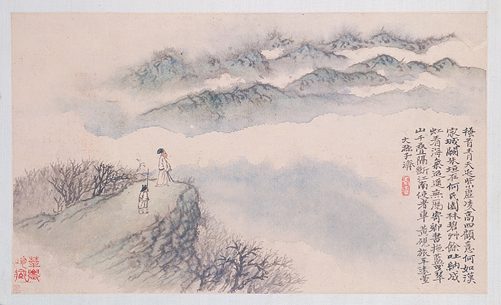
Featured Image, Broad-Distance Pavillion, From Illustrations To The Poems Of Huang Yan-Lü (1701–02), By Shih T’ao, Metropolitan Museum of Art

The Natural and Cultural History of Soil

Soil is the great connector of lives, the source and destination of all. It is the healer and restorer and resurrector, by which disease passes into health, age into youth, death into life. Without proper care for it, we can have no community, because without proper care for it we can have no life.

-Wendell Berry, The Unsettling of America: Culture and Agriculture (1977)

My collaboration with Amanda Littleton and the Cheshire County Conservation District began with a question: how does the mission of a conservation district—to improve management practices that improve soil health while increasing the viability of a farm and to educate the general public that healthy soil is the foundation for a healthy food system—connect to ideas about the natural world, public interest in working landscapes, and the cultural narratives and ideas that shape our understanding of the land?

The series of events we organized successfully answered the question through community engagement with the complex relationship between natural and cultural history. A distinctive strength of this project, from a public humanities perspective, was the diversity of people who participated in the events. “The Natural and Cultural History of Soil: Cultivating Fertile Soil, Generating Resilient Communities” put books into the hands of farmers working the land, local residents working in environmental education, interested members of the community, educators, and students. In addition, our decision to make available more than one book—Dr. David Montgomery’s nonfiction “trilogy,” Dirt: The Erosion of Civilizations (2007), The Hidden Half of Nature: The Microbial Roots of Life and Health, with Anne Bilké (2016), and Growing a Revolution: Bringing Our Soil Back to Life (2017)—broadened our audience and enriched our discussions.

The film screening and panel discussion, and the dialogues I facilitated at each of these events, were productive dialogues about the complex relationship between agricultural practices, ecological literacy, and human values. It was especially rewarding to help shape a community inquiry into the basic humanistic and ecological questions I explore with my undergraduate students every semester: Who am I? Where am I? What is going on? Our two evening conversations were characterized by frustration about the scope of the problems we face; the daunting complexity of the choices, responsibilities, and values available to us; the empowering ideas of writers and thinkers whose ideas we can think with as we wrestle with complex questions; and the existing and emerging local solutions that promote not only more sustainable agriculture and economies but also a more rewarding and meaningful life.

Our panel discussion provided insights of a conservation professional, two working farmers, and an educator: Steve Pytlik, a District Conservationist working for the USDA Natural Resources Conservation Service in Walpole, NH; professor Tatiana Schreiber, who has advanced degrees in Rural Sociology and Nutrition, Mass Communications, and Environmental Studies; and Frank Hunter, who majored in Environmental Studies at Prescott College in AZ, and Kim Peavey, who studied literature and theology as a graduate student and has published over thirty articles on sustainable farming, parenting, and spirituality, who have together been raising vegetables with the help of their draft horses for over seventeen years. Following comments about the books, I facilitated a discussion using passages from the books selected by the panelists.

Introducing David Montgomery in Alumni Hall at Keene State College

In early November, following the film screening and the book discussion in October, the author Dr. Montgomery presented to a packed room at the NH Conservation District Annual Meeting. The following day I had the honor of introducing Dr. Montgomery to the students, faculty, and staff of Keene State College for a talk that concluded the series. In my introduction, I shared my thoughts on Dr. Montgomery’s place among scientists who have dedicated themselves to connecting different areas of scientific inquiry, developing a vocabulary to express what science tells us, and telling a story that can help us change the way we see ourselves and our world—including Rachel Carson, E.O. Wilson, Sandra Steinbgraber, and Mark Bekoff. Each of these writers, I explained, is aware that the real, material ecological crisis we face is also a cultural crisis, a crisis of representation. That is to say, I concluded, the inability of political cultures to address the environmental predicaments of our time is in part a failure of narrative.

The environmental humanities begins in this idea: that we need better stories that connect us to one another and to the more-than-human world we share. Dr. Montgomery’s award-winning popular-science books, offered readers an accessible story about natural and cultural history—a chronicle that invited participants to change how they think about themselves and the world.

The overarching questions we were asking included the following:

  • How do historical examples of specific agricultural practices and their effects on the soil inform our current use and value of the soil?
  • What do our current agricultural practices of agriculture say about us both individually and collectively?
  • How do we think about soil in historical, political, historical, sociological, economic, technological, even moral terms?
  • How do we understand the social needs and demands of our local agricultural economy, the natural constraints of ecology and the political imperatives of democracy?
  • And how do we reconcile agricultural practices, community health and resiliency, food health and security, with our insatiable consumer economy?

It was delightful to have David with us here at Keene State College and to work with Amanda Littleton to share his writing and presence with members of the Monadnock region. The adventure in the public humanities brought together farmers, members of the community, and students to think together about the world in which we live. We also developed a reading list, The Literature of Dirt, that includes other resources for a season of reading and thinking about the source and destination of all.

As a professor who has worked with the New Hampshire Humanities Council since 1998, and who has facilitated dozens of book discussions at libraries around the state, I am grateful for the support of this project. My hope is that the Humanities Council will use this successful dialogue to expand the reach of the humanities through comparable collaborations with other organizations and institutions. These kinds of partnerships begin in questions about how to create dialogues across the communities that define us. We need these questions, as well as the answers they might lead us to consider.

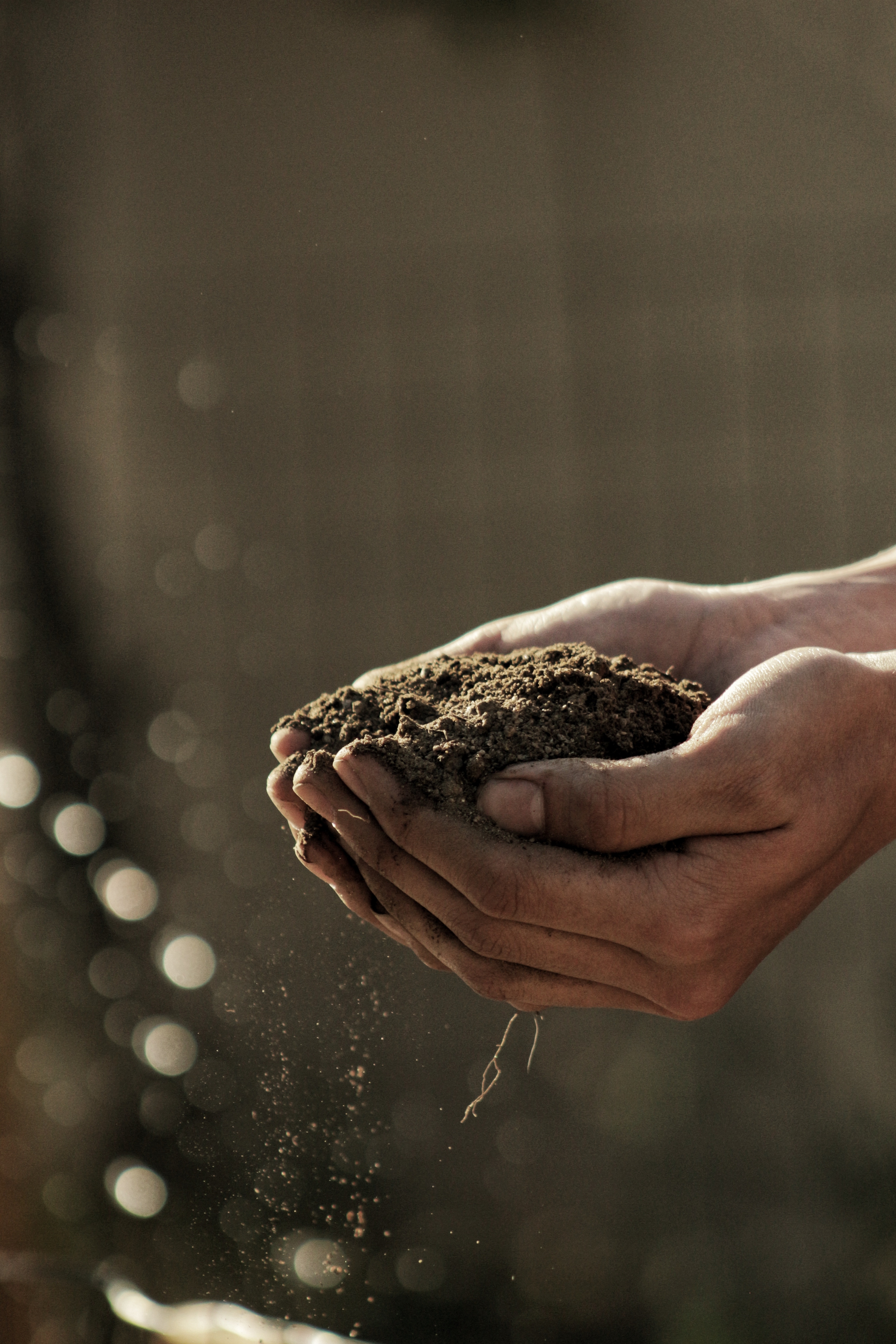
featured image by Gabriel Jimenez

The Literature of Dirt: A Reading List

Franklin Hiram King, Farmers of Forty Centuries; or Permanent Agriculture in China, Korea, and Japan (1911)

In the early 1900s Franklin Hiram King of the U.S. Department of Agriculture shares how farmers in China, Korea, and Japan cultivated land and maintained soil fertility for more than four thousand years

Rachel Carson, “Realms of the Soil,” chapter 5 of Silent Spring (1962)

Carson’s chapter on the ecology of soil documents the environmental effects of broad-spectrum pesticides

Masanobu Fukuoka, The One Straw Revolution (1975)

A practical and philosophical manifesto about no-till agriculture, farming, eating, and the limits of human knowledge

Wendell Berry, The Unsettling of America: Culture and Agriculture (1977)

Essays on the practices and assumptions of modern agriculture and an extended argument about modern life and its loss of community, devaluation of work, and destruction of nature

William Bryant Logan, Dirt: The Ecstatic Skin of the Earth (1995)

A literary and cultural reflection on dirt—the “ecstatic skin of the earth”—and that inspired the 2009 American documentary film directed by filmmakers Gene Rosow and Bill Benenson

David Montgomery, Dirt: The Erosion of Civilizations (2007)

A history of the problems of soil degradation and erosion from the beginnings of human agriculture to the present

Eric C. Brevic and Lynn C. Burgess, eds, Soils and Human Health (2012)

Essays that introduce readers to human health covering the influence of soil conservation and contact with soil on human health

Judith D. Schwartz, Cows Save the Planet: And Other Improbable Ways of Restoring Soil to Heal the Earth (2013)

Environmental journalism that links soil restoration to environmental, economic, and social problems, from climate change, desertification, biodiversity loss to rural poverty, and malnutrition

Courtney White, Grass, Soil, Hope: A Journey Through Carbon Country  (2014)

A chronicle of practices that capture carbon in the soil that links our treatment of the soil with the future of the planet

Kristin Ohlson, The Soil Will Save Us: How Scientists, Farmers, and Foodies Are Healing the Soil to Save the Planet  (2014)

An exploration of soil through stories of scientists and farmers and others of the dynamics of the natural world to adress environmental crisis

Barbara Richardson, editor.  Dirt:  A Love Story (2015)

Thirty-six short nonfiction essays (2015) on the beauty and mystery of dirt

David Montgomery, Growing a Revolution: Bringing Our Soil Back to Life (2017)

A geomorphologist tells the story of an emerging transformation of agricultural practices that begins with the soil and soil fertility—a revolution in philosophy and practice

Paul Bogard, The Ground Beneath Us: From the Oldest Cities to the Last Wilderness, What Dirt Tells Us About Who We Are (2017)

An exploration of the ground beneath us—from some of the oldest cities to the undisturbed areas we call wilderness. “We walk on ground that teems with life—an incredible one-third of all living organisms—a trove of biodiversity still only just starting to be explored”

Soil Resources

 Dig It! The Secrets of Soil 

Exhibit from the Smithsonian’s National Museum of Natural History on display at the Museum from July 18, 2008 through Jan 10, 2010. Includes useful links to extension activities, educational materials, and further reading

Global Assessment of Soil Degradation GLASOD

The UNEP-funded GLASOD project has produced a world map of human-induced soil degradation, using a expert-based approach. Includes a global map, at a scale of 1:10 million, and documented in a downloadable database

International Year of Soils Web Site (2015)

The Food and Agriculture Organization of the United Nations has been nominated to implement the IYS 2015, within the framework of the Global Soil Partnership and in collaboration with Governments and the secretariat of the United Nations Convention to Combat Desertification. Includes audio, video, and print resources

Natural Resources Conservation Service 

A collection of soil education resources and links to print and web-based information

The Land Institute

The Land Institute is a science-based research organization based on Salina, Kansas, working to develop an alternative to current destructive agricultural practices

Soil Knowledge Network

The NSW Soil Knowledge Network Inc. is a group of retired and semi-retired soil specialists who are passionate about soil and the land.  They are an independent, not-for-profit group, which captures critical soil knowledge and experience

The Alliance of Crop, Soil, and Environmental Science Societies (ACSESS)

The Alliance of Crop, Soil, and Environmental Science Societies (ACSESS) is an association of prominent international scientific societies headquartered in Madison, Wisconsin, USA. ACSESS was created by and is composed of the American Society of Agronomy (ASA, founded in 1907), the Crop Science Society of America (CSSA, founded in 1955), and the Soil Science Society of America (SSSA, founded in 1936). Includes an extensive digital library of books, journals, magazines, and presentations

George Monbiot, Journalist

Essay “Ploughing on Regardless” (published in The Guardian 25 March 2015) centered around a question: Almost all other issues are superficial by comparison to soil loss. So why don’t we talk about it?

The Nature and Properties of Soils (15th Edition) Ray R. Weil; Nyle C. Brady Emeritus Professor

 Developed for Introduction to Soils or Soil Science courses, The Nature and Properties of Soils, Fifteenth Edition, can be used in courses such as Soil Fertility, Land Resources, Earth Science and Soil Geography.

Selected Quotations

“Upon this handful of soil our survival depends. Husband it and it will grow our food, our fuel, and our shelter and surround us with beauty. Abuse it and the soil will collapse and die, taking humanity with it.

–Vedas (Hindu scripture, 1500 B.C.)

“We know more about the movement of celestial bodies than about the soil underfoot.” – Leonardo Da Vinci, circa 1500’s

“Heaven is under our feet as well as over our heads.”

-Henry David Thoreau, Walden (1850)

I bequeath myself to the dirt to grow from the grass I love,
If you want me again look for me under your boot-soles

-Walt Whitman, section 52, “Song of Myself” (1855)

“The washing of soil from the mountains leaves bare ridges of sterile rock, and the rich organic mould which covered them, now swept down into the dank low grounds, promotes a luxuriance of aquatic vegetation that breeds fever and more insidious forms of mortal disease, by its decay and thus the earth is rendered no longer fit for the habitation of man.”

-George Perkins Marsh, Man and Nature (1864)

“The love of dirt is among the earliest of passions, as it is the latest.  Mud-pies gratify one of our first and best instincts.  So long as we are dirty, we are pure.  Fondness for the ground comes back to a man after he has run the round of pleasure and business, eaten dirt, and sown wild oats, drifted about the world, and taken the wind of all its moods.  The love of digging in the ground (or of looking on while he pays another to dig) is as sure to come back to him, as he is sure, at last, to go under the ground, and stay there.”

-Charles Dudley Warner, My Summer in a Garden (1870)

“The United States is a democracy; it does not accomplish its ends by handing down decrees from above, but by the initiative and consent of the citizens, who must first know what they want and how to achieve it.”

–Soils and Men, the 1938 Yearbook of the Department of Agriculture

“We abuse land because we regard it as a commodity belonging to us. When we see land as a community to which we belong, we may begin to use it with love and respect.”

–Aldo Leopold, A Sand County Almanac (1949)

“Nature has endowed the Earth with glorious wonders and vast resources that man may use for his own ends. Regardless of our tastes or our way of living, there are none that present more variations to tax our imagination than the soil, and certainly none so important to our ancestors, to ourselves, and to our children”

– Charles Kellogg, The Soils That Support Us (1956)

“There are few studies more fascinating, and at the same time more neglected, than those of the teeming populations that exist in the dark realms of the soil. We know too little of the threads that bind the soil organisms to each other and to their world, and to the world above.”

-Rachel Carson, Silent Spring (1962)

“Soil is the great connector of lives, the source and destination of all. It is the healer and restorer and resurector, by which disease passes into health, age into youth, death into life. Without proper care for it, we can have no community, because without proper care for it we can have no life.”

-Wendell Berry, The Unsettling of America: Culture and Agriculture (1977)

The god of dirt
came up to me many times and said
so many wise and delectable things, I lay
on the grass listening

-Mary Oliver, “One or Two Things” Dream Work (1986)

Adventures in the Environmental Humanities

In June we gathered for the Second Annual Environmental Literature Institute (ELI) at Phillips Exeter Academy. In the fall one of my collaborators, Stephen Siperstein, Choate Rosemary Hall Academy, summarized the week in a piece for ASLE News.

ELI 2.0 brought together secondary school teachers from around the country to Exeter Academy, New Hampshire for a week of professional development in the Environmental Humanities. Continuing to build on the goal of the 2014 ASLE strategic plan to improve public discourse about the environment through community-based, K-12, and undergraduate programs, provided a space for educators of all experience levels to develop courses and curricula for a variety of secondary school settings, to explore how environmental approaches could inform and enliven their teaching, and to build community in the Environmental Humanities.

Our days were filled with discussion, small group work, and time for individual reflection. We read and analyzed works of environmental literature, such as passages from Thoreau’s journal and Mary Oliver’s poetry. We shared resources and helped each other imagine and design ways to incorporate field-based learning and community projects into our environmental humanities classrooms, all while contextualizing such work within wider currents in the field and our own institutions. Among other topics, we also discussed teaching climate change, addressing questions of racial justice in the environmental literature classroom, and learning how to build environmentally-focused communities in our classrooms and institutions. In the words of one participant: “As we explored how to create a classroom of kids with compassion for each other and compassion for the environment, we were sitting around campfires together, we were swimming in a creek, we were taking walks in the woods, we were swinging from ropes in trees. We were becoming the kind of community we talked about.”

Renowned author and plant biologist Robin Wall Kimmerer joined us for a keynote address on the grammar of animacy and the honorable harvest, and led an exuberant field session that highlighted how to put her ideas into practice in the classroom (and how the forest is itself a vibrant environmental humanities classroom). With both her words and her presence, Kimmerer helped us envision the entire enterprise of environmental humanities education as one of reciprocity—between teachers and students, between institutions and communities, and perhaps most importantly between the human and the nonhuman (all of us being, according to Kimmerer, kin). It is gratitude, Kimmerer emphasized in her talk, that pulls us into relations, and it was gratitude that defined the week.

Later in the week we were joined by master teachers Rochelle Johnson and Clare Walker Leslie. Rochelle led sessions on place-based pedagogy and teaching Thoreau in our current political and social moment, while Clare guided a field session in the art of seeing through drawing. Education journalist Michael Brosnan, UNH Professor Diane Freedman, and prominent climate activist and storyteller Devi Lockwood also contributed to the community, adding their perspectives and expertise.

The week concluded with a forward-looking session and time for synthesis: How will we build on the ideas, connection, and energy of this emerging community? How can ASLE welcome even more secondary school educators into its fold? What kinds of Environmental Humanities communities can exist in our classrooms, and beyond them? Between the known and the unknown, the participants at ELI staked out common ground together, and left energized and grateful, ready to return to their own classrooms and institutions this fall and do the difficult (and rewarding) work of building this field from the ground up, student by student.

Environmental Humanities at Exeter

img_0916
A primary need of students and teachers alike

It began with a conversation. Jason wanted to talk over a new environmental literature course at Phillips Exeter Academy, and Mark, at the time the president of ASLE, was hoping to create new opportunities for secondary educators in our association. Two years later, twenty-five elementary and secondary school faculty gathered for the inaugural Environmental Literature Institute (ELI) at Phillips Exeter Academy in Exeter, New Hampshire. Participants from Hawaii, California, New Mexico, Georgia, New York, Vermont, New Hampshire, and Toronto, Canada, spent a week in New Hampshire developing new courses and revising curriculum for a range of secondary school settings.

We welcomed as keynote speaker and workshop leader Scott Russell Sanders, who spent a year at Phillips Exeter in 1974-75 as a Bennett Fellow. And throughout the week we were guided by the generous spirit of the late Exeter Instructor Peter Greer—whose course Literature and the Land was among the earliest environmental literature courses to be taught at the secondary school level.

img_0855
Scott Russell Sanders meets with ELI participants

Each day began with morning physical and reflective activities, including walking and running, yoga, and mountain biking. Participants then circled at the Harkness table to discuss writing by Robin Wall Kimmerer, Gary Paul Nabhan, Richard Wright, Robert Frost, and Marc Bekoff; participated in daily field sessions with the workshop leaders; and took advantage of time set aside for course and curriculum building.

The week included a series of special events as well. Scott Russell Sanders’ presented “Taking Care of Home: Sustainability on a Small Planet.” We discussed Climate change pedagogy via Skype with Stephen Siperstein, who will be joining the faculty of Choate Rosemary Hall next year. We enjoyed an evening with John Elder reading, playing music, and discussing his newest book, Picking up the Flute, at the Water Street Bookstore. And Jennifer Pharr Davis, author and 2012 National Geographic Adventurer of the Year, shared some of her experiences walking over 12,000 miles on six different continents.

img_0854
ELI gathered at the big Harkness table on the top floor of Phillips Hall

Participants considered a range of interdisciplinary and field-based pedagogies. Master teachers Scott and John shared their experiences and provided mentoring—both in the classroom and in a writing and poetry discussion at a local biodynamic farm. Clare Walker Leslie guided participants in the art of seeing nature through drawing—in the classroom, out of doors on the campus, and in the open fields of the Colby Farm. And Patrick Thomas from Milkweed Editions offered an insider’s view of the interplay between writing and publishing. ELI concluded with the participants sharing their work in progress: revised units for existing courses, new course ideas, and aspirations for interdisciplinary collaborations.

Sketching in the field at Colby Farm with the inimitable Claire Walker Leslie

ELI is committed to developing a teacher collaborative committed to developing environmental humanities at the secondary level. Our vision is to share the resources of ASLE with secondary school colleagues as well as to share the wisdom, resources, and pedagogical methods of our secondary school teachers with the members of ASLE who teach in post-secondary schools.

Jason Bremiller (Phillips Exeter), John Elder (Middlebury College), and Soctt Russell Sanders (Indiana University)

Among the goals of the 2014 ASLE strategic plan is to improve public discourse about the environment through community-based, K-12, and undergraduate programs. To this end, members of ELI received two-year memberships to ASLE, a collection of resources from Milkweed Editions, and a subscription to Orion magazine. We have also set up in the ASLE Member Community a Chatter forum designed to share resources and materials among secondary educators working in the environmental humanities. We are considering a workshop at ASLE 2017 featuring ELI alumni. And we are talking about a mentoring network for secondary school teachers as we plan for ELI 2017.