
In the first part of our two-course introductory sequence to the English major I ask students to write an essay about their experiences with academic writing. Their five-page essays allow me to see how students think about writing; and their thinking provides the occasion for an extended discussion about motivations for doing intellectual work in English. Their essays also make visible some impressions of our new first-year course, Thinking and Writing (ITW).
Not surprisingly, thirty-four of the forty essays on academic writing I’ve read this year mention the ITW course. The students who mention ITW confess that the opportunity to write about something that mattered to them is both exciting and terrifying. They express uncertainty about completing a 15-20 page essay. They describe hours of work in the library and their surprise that in fact others have thought about their areas of interest. And they point out how skeptical they are that the area they are writing about is interesting enough for a semester-long project.
If anything, we can count on students coming out of ITW with a vocabulary to talk about thinking and writing as a process. (More so than the students who completed our essay writing course.) Writing in a substantive intellectual context, they tell me, has taught them that good thinking takes time. Moreover, they understand that persuasion requires curiosity and careful reading of, in the memorable words of one student, “interesting people with different views on a topic.” Another student is able to say it this way: “The most effective essays are written by those who truly believe what they are saying, have a well rounded knowledge of the subject, and have put a lot of thought into how to address opposing claims.”
In addition to understanding writing as a process these students have experienced the challenge of being asked to think about something. Again and again, they point to the unexpected freedom of being asked to write about something they care about. Describing her experience with the semester-long essay, one student excitedly describes developing a “tone of authority combined with credibility, a strong format and use of language.” Another student confesses that he now goes into an argumentative essay believing that he will come out of the process “with a whole new perspective.” And yet another student, writing about encountering adulthood, comments that she was able to “share her experiences with love, death, happiness, and sorrow, and connect it all back to show how these experiences helped me grow and mature.” And in doing so, she concludes, “I learned a lot about myself as a person, and was able to explore “my beliefs, my opinions, and my biases.”
In listening to these testimonials we begin to hear the kinds of changes that take place as students navigate the difficult transition to college-level writing. These changes-as longitudinal studies of student writers confirm time after time-do not necessarily appear on the page. Rather the changes take place in the writer. The most lasting of these changes, it follows, are those that involve the experience of being challenged to think on one’s own as well as receiving support to meet those challenges. One student writes, “I put an extreme amount of effort into this essay, and the final product was a huge success.” Another student, however, says something that has stayed with me. “At the end I did not get a really good grade. But I was interested in learning. And I found out a lot about the modern world.”
Such comments may speak to the dedication of those who of us teach the thinking and writing course. But these student, more importantly, make visible the kinds of changes students experience in their first college-level writing course. One question is whether a curriculum that takes thinking and writing to be one of the primary pathways across the four years is a curriculum will measure up to the more ambitious goals our students may now be setting for themselves. The question is whether we are ready to meet them where they are.
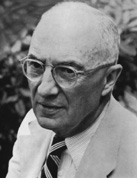 I began writing about American poetry with two peer-reviewed journal articles: one on the poet Denise Levertov and one on William Carlos Williams. In 2004, my work on Williams continued with “Ideas as Forms of Beauty: William Carlos Williams’s Paterson and A. R. Ammons’s Tape for the Turn of Year,” an essay that appeared in the book Rigor of Beauty: Essays in Commemoration of William Carlos Williams. More recently, my work in American poetry and poetics has contributed to the emerging field of ecopoetry. My essay “William Carlos Williams, Ecocriticism, and Contemporary American Poetry” appeared in the book Ecological Poetry: A Critical Introduction. Two additional essays were published this fall: a 10,000 word overview of the life and writing of A. R. Ammons, commissioned by the Dictionary of Literary Biography, and a 10,000 word critical history of the relationship between poetry and ecology that appeared in a multi-volume anthology entitled Reading in Contemporary America. In addition, since 2003, I’ve published shorter reference entries on the American poets William Carlos Williams, Theodore Roethke, Mary Oliver, W. S. Merwin, Gary Snyder, and Denise Levertov. I also regularly review new books of American poetry for ISLE: Interdisciplinary Studies in Literature and Environment. My most recent review is Mary Oliver’s book of poetry Thirst.
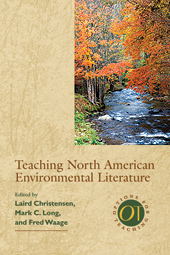 Four years of work with co-editors Laird Christensen and Fred Waage has resulted in the publication of Teaching North American Environmental Literature (MLA 2008). Our book provides a center of access to the range of pedagogical possibilities for teaching environmental literature. The collection includes over thirty contributors and features essays on the environmental literatures of Canada as well as Mexican and Mexican-American environmental literature. The book includes a section for further reading, “Resources for Teaching Environmental Literature: A Selective Guide.” Before my last promotion I published the essay “Education and Environmental Literacy: Teaching Ecocomposition in Keene State College’s Environmental House” that appeared in Ecocomposition: Theoretical and Pedagogical Approaches. This publication has led to a series of publications on environmental writers and ecocriticism. In 2004 I published a 12,000 word entry on John McPhee in Dictionary of Literary Biography: Twentieth-Century Nature Writers: Prose. My essay “Ecocriticism and the Practice of Reading” appeared in the fall of 2006 special issue of the journal Reader: Essays in Reader-Oriented Theory, Criticism, and Pedagogy that I guest edited. Reader is a semiannual publication that generates discussion on reader-response theory, criticism, and pedagogy. My essay, and the special issue, is focused around the relationship between reading and ecological thinking.
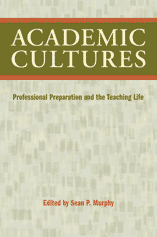 For over ten years I have been writing about the profession of English. As a graduate student, while co-directing the Expository Writing Program at the University of Washington, I co-wrote and published the essay “Graduate Students, Professional Development Programs, and the Future(s) of English Studies” in the journal WPA: Writing Program Administration. Since arriving at Keene State College, my work in this area has focused on the intellectual work of English in particular institutional sites. In 2004, a Keene State College Faculty Development Pool Grant enabled me to travel to the Association of the Departments of English (ADE) Summer Seminar to broaden my perspective as a scholar interested in the profession of English. Moreover, serving for three years as a member (and for one year as Chair) of the MLA Committee on Academic Freedom and Professional Rights and Responsibilities (CAFPRR) furthered my understanding of the general conditions of the field of English studies and the professional lives of teachers and scholars. My subsequent inquiry into graduate training, the professional identity of faculty, and the small college department has been disseminated in a series of publications, book reviews and conference presentations. In 2005 I was invited to write a featured “Commentary” on the small college department, that I titled “Where Do You Teach?”, for the fall 2005 issue of the journal Pedagogy: Critical Approaches to Teaching Literature, Language, Composition, and Culture. And my essay “Reading, Writing and Teaching in Context,” appeared in the book Academic Cultures: Professional Preparation and the Teaching Life (MLA 2008). This essay takes as its subject the representation of faculty work in terms of research and teaching as separate activities. My argument is that this pervasive subplot in the narrative of the profession is rooted in a representation of faculty work that transcends the local institution and the ways that departments and institutions define intellectual work.

