Browse Category

Teaching and Learning

Teaching + Living + Learning

As one of the leaders of a new project KSC Open, I have been sorting through a decade of intellectual work in digital environments.

This work began with my thinking about technology in the writing classroom during graduate school. It gathered momentum in the late 1990s when, as a new assistant professor of English and American Studies at Keene State College, I set up a web site to make public my intellectual work.

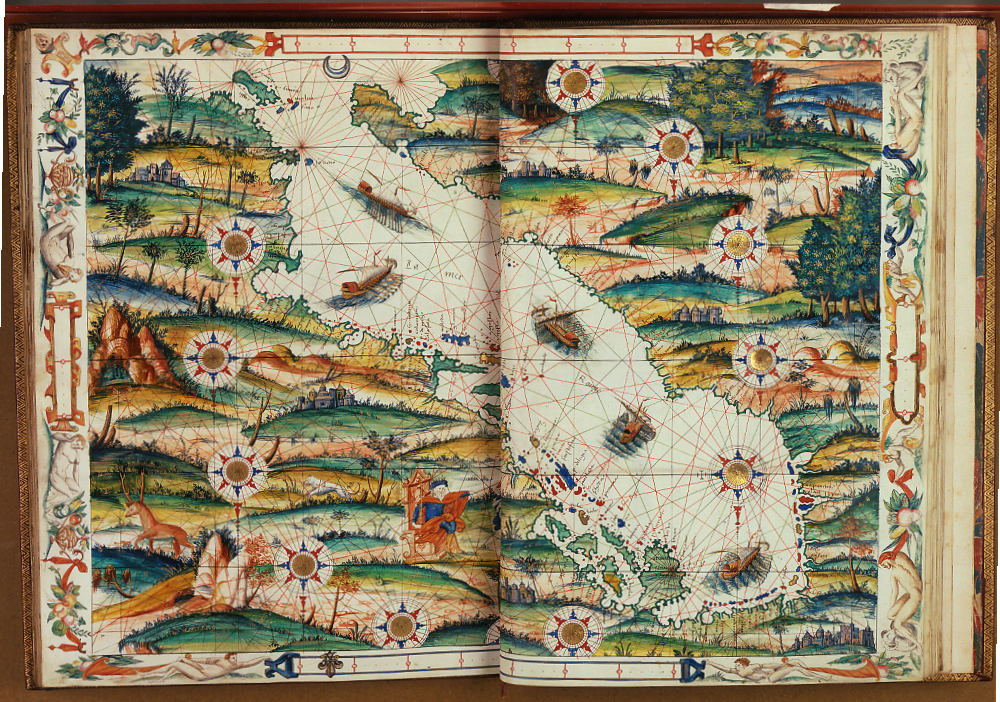
Српски (ћирилица)‎: Portolano Jandranskog mora, škola Dieppe, c. 1538

During a sabbatical in 2008-09, I set up a blog From the Far Field to share with our families and friends our experiences living, working, and traveling in India–sixty or so posts and images in all. The following year this work led in a number of directions:

The Far Field  A chronicle of teaching and learning in English, American, and environmental studies at New Hampshire’s public liberal arts institution of higher learning, Keene State College

Far Field Family A blog for family and friends that keeps tabs on our lives on a New England farm

On Staying Alive A professional mentoring project that offers reflections on the difficult work of sustaining an emotionally, ethically, and spiritually healthy life in academia—no matter what happens.

Course Sites The use of the open-source platform Word Press to move all of my teaching, and my student’s thinking and writing, into the public domain

The course sites were set up on wordpress.com. This summer I moved all these site to ksc.open and created a teaching and learning hub that includes course sites and student project sites: Teaching and Learning at the Far Field.

What I come to realize is that I have found a medium to bring into alignment parts of my life and to integrate those parts: teaching, living and learning. And I am practicing what I am coming to see is an opportunity for students in a Domain of One’s Own project like KSC Open:

Digital Identity (Taking ownership of your presence on the web. Expressing your ideas. Integrating your learning and interests)

Digital Fluency (Using open-source platforms. Building projects using digital tools. Creating portfolios, exhibits, galleries, blogs, or wikis)

Digital Citizenship (Engaging with the community. Constructing the web. Navigating, and critically questioning digital technologies.)

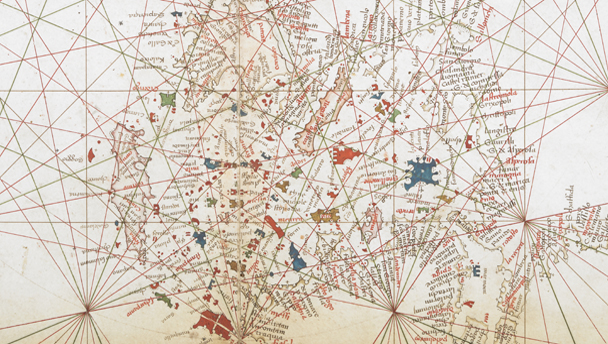
Grazioso Benincasa (1473) from the British Library Pelagios Project: Portolano. Egerton MS 2855


Here is a working map, a portolano of sorts, of what Teaching, Living and Learning at the Far Field looks like from a guy who surely needs to learn a thing or two about design, mapping, and visual displays of information.

Knowing and Doing

Among the enduring privileges of professing college English is designing opportunities for students to discover through their studies possibilities in their lives that might not otherwise have presented themselves were they not in school.

Recently three of my former students, and a KSC graduate and collaborator, have been appeared in College publications. While I am not able to to credit for the trajectories of these amazing people it feels good to know where they are, what they are doing, and knowing that what they are doing they are doing well.

Lilly Goldberg is Gala and Membership Associate, at the National Portrait Gallery in the Smithsonian Institution, Washington, DC. An alumni note Following the Path with Passion appeared on the Keene State College Academics web page.

Clai Lasher Sommers is the owner of New Dawn Farm in Westmoreland, New Hampshire. The story Poetry and Farming appeared this past spring.

Peter Beauchamp is featured in a special issue of Keene State Today focused on Justice, The Promise of the Constitution (page 12) with a photograph of Peter at a Law Day celebration in Manhattan with Supreme Court Justice John Paul Stevens.

Laird Christensen, friend, collaborator, and Keene State College graduate, is featured in Going to College, Coming Home to Himself.

The Fruit of Education

One of my current preoccupations as the Director of the Integrative Studies program is thinking about the common elements of a baccalaureate degree. And it is a good thing, too, for when I began my three-year term as Director this past fall my charge included overseeing the largest academic program at the College, working with colleagues to improve the Program, and envisioning what the Program might be.

Many institutions of higher education, including Keene State, require students to take courses that are, by design, not a part of their professional aspirations or vocational goals. The idea behind these course general requirements goes back to the historical Socrates in Athens, as well as Seneca and the Stoics in ancient Rome. In the words of Martha Nussbaum, the idea of a liberal education involves literacy, including cultural literacy, to “make the mind more subtle, more rigorous, more active,” and the idea of access, so that “in this messy, puzzling, and complicated world,” all citizens are empowered “to question everyone, recognizing everyone’s humanity.”

The classical ideas that underpin a liberal education in the United States include access. For in a modern democracy, a college education, in principle, should be available to all and not limited to instrumental goals: a college education, in the words of Nussbaum, should offer students “something that can impart meaning and discipline to their intellectual lives in a general way, making them both richer as individuals and better informed as citizens” (43). This is the idea behind general education.

Of course general education as we know it today is a twentieth century phenomenon. It is in part a response to the rise of the research university between 1820 and 1920 and the focus of specialized research. As Louis Menand explains in his reliable little history, The Marketplace of Ideas: Reform and Resistance in the America University (2010), one notable agent of change was Charles William Eliot who proposed that the bachelor’s degree be a prerequisite for admission to professional school. In an 1869 article in the Atlantic Monthly, Eliot write that the ideal collegiate experience would be “the enthusiastic study of subjects for the love of them without any ulterior objects.”

In the twentieth century, critics responded to what they considered pre-professional training and overspecialization, on the one hand, and the neglect of the socializing function of higher education, on the other. One response, at Columbia University, as well as at Dartmouth, Stanford, Williams, and other elite colleges, was to design courses on citizenship, a development that arose out of anxiety about the larger number of immigrants, or the children of immigrants, seeking the opportunity promised by higher education. The focus of the general education curriculum would be some version of what professors considered a common culture, again a response to the declining moral authority of traditional institutions, in the post-war period.

What has become clearer over the years is that the problem of general education is that a college’s general education curriculum, in the words of Menand, “what the faculty chooses to require of everyone, is a reflection of its overall educational philosophy.” The other part of the problem is that the curriculum is always changing in response to changes in the culture and to values that a faculty determine constitute a liberally educated person. It is no wonder that revising a general education program–as I learned as a member of the committee that designed the Integrative Studies Program in 2006–“is a labor-intensive enterprise, because general education goes to the heart of what a faculty thinks college is all about.”

It follows that the conversations I am having as Director of Integrative Studies are about education–what faculty and staff and students believe education should be. What knowledge and skills are relevant to students? What ways of thinking and knowing matter, and will matter, in the lives of our students beyond school? Many of the arguments are surprisingly simple, breaking along the lines of liberalism and professionalism, of cultivating our humanity or acquiring so-called practical professional skills.

A sensible path to thinking about general education is reading about the history of this idea about what education is–and what it ought to be. For me this reading has included Nussbaum’s 1997 classical defense of reform in liberal education, Cultivating Humanity, as well as Menand. This thinking has guided me to a number of interesting documents, including the 1945 Harvard Report on General Education. The Report describes the general abilities a student will cultivate in college–“effective thinking, communication, the making of relevant judgments, and the discrimination of values.” The committee that drafted the report then adds that these abilities will be of little use unless the student can relate this learning “to the realities of experience and practice.” This holistic view (in a charmingly antiquated title for the section) is elaborated in “The Good Man and the Citizen.”

What is remarkable is the full description of what is called in the Report “Personal Integration,” or what is called the “proper fruition” of a liberal education. Education should focus on more than “bookishness and skill in the manipulation of concepts,” the goal of what is called in the Report “specialism.” It should focus, rather, on the whole person and the cultivation of reason through what the Report calls integration. The authors note that reason is “not an activity apart, but rational guidance of all human activity. Thus the fruit of education is intelligence in action. The aim is mastery of life; since living is an art, wisdom is the indispensable means to this end.”

This is remarkable to me because about ten years ago the faculty at Keene State College voted to approve a general education curriculum that we called “Integrative Studies.” Just what we meant by integration was not especially clear–or, more precisely, it was clear but clarity was in the eye of the beholder. I recall objecting to the term at the time, in fact, arguing that the term was too abstract.

Over the past decade teaching in the Program, and helping to administer the first-year writing course that is one of the foundational courses, I have come to think that the term integration may be worth keeping around. In the revision of the ISP learning outcomes last year, we define the term as “the capacity to integrate learning within the curriculum, between the curriculum and the co-curriculum, and with communities beyond the classroom.” We go on to say that “integrative learning is both a framework for teaching and learning in all ISP courses and also a summative learning outcome for the program.”

Representation of the ISP Program, Randall Hoyt, fall of the 2016-17 academic year

Others clearly agree. As a recent National Academies of Sciences, Engineering and Medicine Report by the Board on Higher Education and Workforce suggests, it is integrating higher education in the arts, humanities, sciences, engineering, and medicine that “will enable all citizens to have enriching and meaningful life. As such, we believe that more effective integration of educational experiences in all disciplines—particularly in the arts, humanities, sciences, engineering, and medicine—will benefit all of our nation’s citizens.”

No doubt integration of disciplines and interdisciplinary fields of study is something faculty and program administrators can promote. But integration, in the end, is something our students do. Students should be able to experience the ways one course informs and deepens their learning in one or more other courses, and the ways that their learning in one or more courses is connected to their out-of-class experiences. But how exactly do we help them integrate what they are learning?

One strategy we pursued this past year was to have the students tell us. During the semester I joined with my friend and colleague Randall Hoyt, professor of Graphic Design, and his student Dylan, to interview four students about their experiences in the ISP. Our goal is to better explain the program—to faculty and staff, prospective students and families, and current students—and to empower students to make thoughtful decisions about their ISP course selections.

I had the good fortune to have a committee of faculty from across the College who are committed to the Program. The Members of the Integrative Studies Program Committee (ISPC) this past year were Mike Cullinane, QL Coordinator; Katherine Tirabassi, ITW Coordinator; Steven Harfenist, II Coordinator; Carol Leger (fall) and Bob Schauman (spring), KSCAA; Kathleen Forrister, Professional and Graduate Studies; William McCulloch, Sciences and Social Sciences; Randall Hoyt, Arts and Humanities; Elizabeth Dolinger, Library; George Smeaton, Office of Institutional Research and Assessment.

If one is interested, I include a summary that I included in my year-end report on the Integrative Studies Program. This is the work we will build on next year as we begin an institutional reorganization. One part of this reorganization is a Center for Integrative Learning in which the ISP will be housed. I am cautiously optimistic that this change will result in more faculty engagement in the ISP and more understanding among our students of the value of the ISP in their experiences as students at Keene State College.

  1. Summary of Work

The ISPC enjoyed a productive year. Our work focused on 1) curriculum and program development; 2) aligning policies and practices; 3) communication, outreach, and promotion; 4) visibility and representation of the ISP, 5) enrollment and staffing; 6) faculty development; and 7) program assessment. The fall 2016 ISP curriculum proposal included a simplified list of ISP learning outcomes approved last year and revised (and simplified) description of the purpose and philosophy of the Program. The ISPC completed a review of ISP policies and the ISPC and the KSC Senate Executive Committee unanimously approved a revised policy document. And, in collaboration with the Office of Institutional Research and Assessment, we designed a cycle for ISP assessment that offers faculty time and space to consider what we discover in our assessments, and to consider possible changes to the ISP based on our findings. As we look ahead to 2017-18, we are hopeful that the proposed two-school administrative structure for the College will strengthen the Integrative Studies Program, and the place of integrative learning, in the undergraduate curriculum at Keene State College.

  1. Work Accomplished
  • ISPC Charge Approved by the College Senate Developed in consultation with the Office of the Provost and in conversation with members of the College community. The ISPC presented the agenda items to the SEC so that the working agenda would be shared with the campus via the Senate
  • Submitted Program Redesign Proposal to curriculum committees and Senate Executive Committee/Academic Standards. Unanimously passed by Senate. Policy changes approved as retroactive to earlier catalog years
  • Drafted Statements of Roles and Responsibilities for ISP Coordinators We outline the QL, ITW and II coordinator responsibilities, subcommittee charge and responsibilities, as well as course review policies/processes. These reports will be useful for the coordinators, the associate provost and provost, as well as faculty considering serving in these roles. The reports will be reviewed and, when necessary, updated, annually. (See documents in Appendices to this Report)
  • Completed Comprehensive Policy Review and Update that was approved by the College Senate and made available on the Senate ISP and the ISP web sites
  • Revised ISP Amendment Policy The Integrative Studies Program Committee (ISPC), any faculty member(s), or academic department(s) may propose a change to the structure, principles, or policies of the Integrative Studies Program by submitting the proposed change in writing to the ISPC. The ISPC will consult with the proposal originator(s) and with the chairs of the Senate Curriculum Committee (SCC), the Standards Committee (ASC), and the Academic Policy Committee (APC) to determine an appropriate timeline for considering the proposal. The ISPC will then send the proposal to all Department Chairs for advisory opinions. After the time for departmental advisory opinions has past, the ISPC will submit the proposal with their vote and advisory opinion plus any departmental advisory opinions to the School Curriculum Committees. The School Curriculum Committees will review the proposal and forward their votes to the SCC, the ASC, the APC, and the Senate, as appropriate, for a vote
  • Articulated and Clarified Transfer Credits Policy The Keene State College Credit Transfer Policy allows credits to be allocated to Integrative Studies Program requirements or electives. Advanced Placement (AP) and College-Level Examination Policy (CLEP) equivalencies are available at Academic and Career Advising (ACA) web site on the “Credit by Examination” page. Other transfer credits for ISP courses are listed on the “Articulation Agreements” page. Transfer credits from institutions in the United States and at international institutions are listed on the “Transfer Credits” page. Study-Away credits may be used to fulfill one upper-level ISP course with the approval of the Director or Associate Director of the Global Education Office (GEO)
  • Completed a Successful Search for a Coordinator of Integrated Thinking and Writing The committee (Mark C. Long, English (chair), Michael Cullinane, Mathematics, and Susan Whittemore, Biology, read the application materials, interviewed, and recommended hiring Irene McGarrity for a three-year term as Coordinator of ITW
  • Updated and Revised the ISP Document Archive on the Senate Web Site (See Appendices to this Report)
  • Hosted Team from Castleton University to discuss AACU Foundations, Connections, and Directions Grant with Ingrid Johnston-Robedlo, Dean of Special Academic Programs; Chris Boettcher, Associate Professor of English; Sue Generazzo, Associate Professor and chair of Math Department; Dennis Proulx, Dean of Students
  • Developed an ISP Advising Guide and distributed to faculty and staff. Will be distributed in subsequent semesters prior to registration period in the fall and the spring
  • Published Course Profiles in the Academic Affairs Newsletter: Steve Harfenist’s Physics and Music and Marcia Murdock’s Dance as a Way of Knowing
  • Convened Monthly Meetings with the Chair of the Senate and Attended Senate Meetings (when necessary) to clarify and strengthen alignment of ISP with existing curriculum process at the College
  • Conducted Video Interviews with Students and produced an ISP Promotional Video Featuring Student Sarah Dugas. During the semester Randall Hoyt, his student Dylan, and Mark Long interviewed four students about their experiences in the ISP to better explain the program—to faculty and staff, prospective students and families, and current students—and to empower students to make thoughtful decisions about their ISP course selections.
  • Meetings with Working Groups on Campus to develop collaborative models with academic and co-curricular groups, college-wide learning outcomes, the Center for Creative Inquiry (CCI), Living Learning Communities (LLCs), Open Pedagogy Learning Community
  • Engaged in an Open and Integrative Project to explore ISP involvement in Open Educational Resources, Open Pedagogy, and Technology Fellow Program. Mark met monthly with Jenny Darrow, Director of Academic Technology, and the Academic Technology Steering Committee (ATSC) chair Karen Cangliosi to design a Domain of One’s Own pilot project for 2017-18. In June Mark attended the Domains 2017 Conference with Jenny and Karen in Oklahoma City.
  • Collaborated with Student Affairs on a Title III Grant Project that, if successful, will expand the College’s capacity to serve first-year, low-income, Pell recipients and transform the campus’s engagement with first-year students. The structured First Year Experience for entering students is designed 1) to improve academic success, 2) increase retention & graduation, and 3) enhance campus-wide community and culture
  • Developed a staffing plan for ITW and worked with the Director of the Honors Program, and the Academic Affairs Council to discuss feasibility and implementation in a more deliberate and effective staffing model for academic year 2017-18
  • Promoted Writing in the ISP and Across the Curriculum through a learning community using John Bean’s Engaging Ideas: The Professor’s Guide to Integrating Writing, Critical Thinking, and Active Learning. Kate Tirabassi and Mark Long facilitated two meetings each semester
  • Conducted two Workshops on Supporting Student Writers at KSC as part of the May Faculty Enrichment Day to share the work of teaching writing across the four year and sustain a collective of faculty teaching writing across the disciplines and in the disciplines. At these workshops, Kate Tirabassi and Mark Long distributed copies of Engaging Ideas, now in its second edition, a book that was developed for faculty teaching in a new core curriculum at Seattle University. We have distributed a copy of Engaging Ideas to all who attended ISP-sponsored workshops in the spring of 2016, fall of 2016, and spring of 2017
  • Conducted an ISP Workshop on Tuesday May 16 to review changes to the ISP and to offer faculty and staff a forum for sharing ideas about how to strengthen the Program. Part I, “Make it New: ISP Outcomes, Curriculum, Policies, Advising,” reviewed changes to the ISP in 2016-17 and offered an opportunity for faculty and staff to ask questions about the Program and to share thoughts with the ISPC as we look ahead to the 2017-18 academic year. Part II, “Looking for the ‘We’ in the ISP,” an integrative learning collaboratory, invited the fifteen faculty and staff who attended to share ideas about integrating lower- and upper-level courses, building parallel courses or course sequences that bring faculty and students together, or addressing ISP and/or college-wide learning outcomes through concurrent or sequenced courses, academic and co-curricular collaboration, team-teaching
  • College-Wide Learning Outcomes and the ISP Mark met monthly with Patrick Dolenc and Kim Schmidl-Gagne, and at the end of the semester with the CWLO steering committee. Mark worked with Pat and Kim to plan and present an ISP/CWLO presentation as part of the end-of-the-year Academic Affairs meeting
  • Developed a Three-Year Assessment Cycle for ISP Program Outcomes (See Appendices to this Report.)
  • Worked with George Smeaton on an Assessment of Writing Kate Tirabassi and Elizabeth Dolinger who developed a new rubric for assessing writing. Elizabeth Dolinger, Mark Long, Kate Tirabassi, and Michael Wakefield conducted a direct assessment of writing using essays from Thinking and writing.
  • Met with Paul Baures, Chemistry, and Renate Gebauer, Environmental Studies, and George Smeaton to discuss the National Academies of Sciences, Engineering, and Medicine report “Integrating Higher Education in the Arts, Humanities, Sciences, Engineering, and Medicine”
  • Developed an ISP Question for the Alumni Survey for the Keene State College class of 2015 that asks: “What experience did you have at KSC—inside or outside the classroom—that has proved most valuable for whatever you are doing now in your life?” One respondent wrote the following: “My integrated studies courses proved helpful as they gave me the generalist educational background that I need out here to teach every class”
  • Meeting with Faculty Participants in the Undergraduate Research and Creative Endeavors (URCE) Mark met with faculty in the summer 2017 Institute to explore possible connections between URCE and the ISP
  1. What challenges had an impact on your work this year?

The Integrative Studies Program has become central to our identity at Keene State. And yet there remains considerable concern that it isn’t “integrative” in any meaningful sense. Integrative learning is a framework for teaching and learning in all ISP courses and a summative learning outcome for the Program. The challenge for us can be stated in the form of a question: how do we create opportunities for our students to integrate learning—within the curriculum, between the curriculum and the co-curriculum, and with communities beyond the classroom?

  1. What goals would you suggest for the next year of work in this area?
  • Continue ISP Visibility Project to more clearly articulate the ISP in the academic profile of the College and in the experience of our students. Continue revising and updating the ISP web pages to more directly and simply communicate values of the ISP and goals of a liberal integrative education. And develop additional short video features to capture and document how our students make the most of their ISP
  • Work with Dean of the Mason Library to develop a transitional plan for the ISP in the new College structure in general and the Center for Integrative Learning in particular Discussions may include writing across the ISP, the relationship between ITW and 200-, 300-, and 400-level courses, upper-level ISP courses, and “pathways minors” in the ISP
  • Complete a Foundational Requirements Review to address curricular and program structure of ITW and QL by engaging the ISPC in a deliberate review of the two foundational courses; write a report for the associate provost; meet with associate provost to discuss findings and possible recommendations for campus discussion, if necessary
  • Meet with Faculty and Staff, Program Chairs and Coordinators to gather information and perspectives on the ISP and to cultivate relationships for program-related initiatives as we transition to the new College structure
  • Meet with Registrar and Staff to clarify program requirements (most notably the NEASC requirement for a 40-credit program minimum) and to discuss consistency and fairness in waivers/exceptions/substitutions we approve
  • Meet with the Deans and the Academic Affairs Council to discuss ISP-related issues and invite deans to an ISPC meeting to discuss the program as we transition to the new College structure
  • Provide Guidance for Faculty in Revising Course Outcomes and facilitate the process in which each course will include the integrative learning outcome, the academic perspectives outcome, and two of the five skills outcomes
  • Plan Faculty Development Initiatives and set goals related to ISP faculty development across the next three years. Collaborate with Faculty Enrichment, Center for Writing, and other relevant offices/programs/groups, as needed
  1. What challenges do you anticipate in your efforts next year?

We anticipate challenges in moving ahead with strengthening the ISP when the focus of departments and academic programs will be articulating their work within the new administrative structure. However, we remain hopeful that the proposed two-school administrative structure will strengthen the place of the Integrative Studies Program in the Center for Integrative Learning.

  1. Do you have any other comments that might be relevant here?

We appreciate the support we have received from the Office of the Provost and the deans this year. In addition, Mark would like to express his gratitude to the members of the ISPC. Each member of the committee provided valuable input and participated in various projects and initiatives.

Respectfully submitted,

Mark

Mark C. Long
Professor of English
Director, Integrative Studies Program


Democratic Spaces

From the excitement of the NAPLA project in the fall of 2016 to the challenges of the Open Space of Democracy in the spring of 2017—a year of teaching and learning on which to continue building.

In the spring of 2017 my classroom work centered on a new course for American Studies students, The Open Space of Democracy. The idea for the course emerged from a line in the amazing prose essay by the nineteenth-century writer Walt Whitman, “Democratic Vistas,” in which he writes, “democracy is a great word, whose history, I suppose, remains unwritten, because that history has yet to be enacted.”

Everything unfolded from there—and it was a good thing, too, as the very idea of democracy was once again (and remains) at stake. So my students and I got to work in January tracing Whitman’s supposition from the formative ideas about democratic culture that emerged in the United States in the nineteenth century to the debates in the twentieth century about art and public engagement that arose in response to John Dewey’s ideas about what he called “creative democracy,” in writing by Horace Kallen, Muriel Rukeyser, James Baldwin, Adrienne Rich, Terry Tempest Williams, and in recent theories and practices of socially engaged art.

The reading, class activities, and writing were guided by Terry Tempest Williams, who makes a case in The Open Space of Democracy that democracy “depends on engagement, a firsthand accounting of what one sees, what one feels, and what one thinks, followed by the artful practice of expressing the truth of our times through our own talents, gifts and vocations.” Practicing the scholarly methods humanists use to work with cultural materials, students contributed to the Aspect Magazine Project in the Keene State College archives. The students designed an individual research project using primary materials, and library-based and digital archives. This process is documented on the course site, particularly in a post from the course site, Roads to Take.

Students further developed their research experience and methods by defining, organizing, and elaborating the significance of their literary and cultural materials in the public domain by contributing to the project site Democracy + Culture.

We designed this project to make visible students thinking through the problem of defining, building, and sustaining a democratic culture, and one of the students produced a video trailer” for the course that will offer one point of inquiry into the intellectual work that I believe should be central to the public liberal arts.

Caution: students at work in the Mason Library archive at Keene State College

Days in the Open

I am becoming increasingly aware of a conversation that I did not know I was a part of. Or perhaps it is that I am finding my way through what I am doing to a conversation. And I am thinking of the “unending conversation” Kenneth Burke describes in his 1941 book The Philosophy of Literary Form:

Imagine that you enter a parlor. You come late. When you arrive, others have long preceded you, and they are engaged in a heated discussion, a discussion too heated for them to pause and tell you exactly what it is about. In fact, the discussion had already begun long before any of them got there, so that no one present is qualified to retrace for you all the steps that had gone before. You listen for a while, until you decide that you have caught the tenor of the argument; then you put in your oar. Someone answers; you answer him; another comes to your defense; another aligns himself against you, to either the embarrassment or gratification of your opponent, depending upon the quality of your ally’s assistance. However, the discussion is interminable. The hour grows late, you must depart. And you do depart, with the discussion still vigorously in progress.

The conversation is about teaching and learning. Although the quaint parlor I am asked to imagine is now a stream of thought made possible by digital networks.
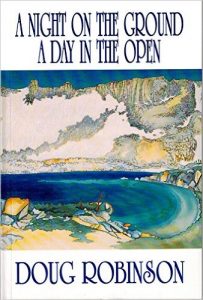
51fpky2zjsl-_sx336_bo1204203200_After a conversation about openness and education the other day with my friends and colleagues Jenny and Karen, for some reason a book on my shelf caught my eye—a collection of essays by Doug Robinson, A Night on the Ground, A Day in the Open. As it happens, Doug’s writings from the 1970s include “Running the Talus,” an essay that was profoundly inspiring for a young man exploring the valleys and high peaks of California’s Sierra Nevada.

(Cover art: Lake Basin the High Sierra, Color Woodblock Print, Chiura Obata, 1930)


But Doug’s words bring back more than just adrenaline-fueled days in the mountains before this twenty-something mountaineer headed off to try school—those hundreds of peaks climbed, twenty-pitch days on a granite wall, day-long trans-Sierra runs, high mountain traverses, deep powder days, and backcountry ski descents.

2

In the mid 1990s I became interested in more visible (open?) teaching and learning. Reading a Report published by the Modern Language Association published the year I completed graduate school, making-faculty-work-visible , led to a series of attempts to come to terms with the surprising ways that academic disciplines diminish the value of teaching and pedagogy. I presented three talks on making teaching and learning more visible: in 2001 in New Orleans, “Pedagogy in the Public Domain,” in Chicago, “Open Pedagogy and the Public,” and in New York, “Narratives from the First Year: a Plea for Visibility.”
img_0960

Looking back, I see myself groping toward an understanding of (and a mild impatience with) teaching as a mostly privatized practice. When I returned from a sabbatical in India, these interests emerged in my scholarship, specifically in an essay I wrote as a guest editor to a special issue of the  journal Pedagogy, Centers and Peripheries, and in my teaching, as I began experimenting with opening up my classroom. Inspired by my friend and collaborator Sean Meehan, notably his dynamic teaching blog Comp|Post, I put my course syllabi and materials on the open-source platform Word Press.

As a result, all of the writing in my courses was visible. Everyone—the writer, the teacher, the classmates, and anyone else who might be interested—had access to the intellectual work of a college professor and students in the classroom. Sean also helped me to see a course not only as open, but also as an ongoing project. Each course would frame the core questions and problems that arise in the study of what I was teaching. The course process—the materials, my teaching, student learning, and the writing they produce—would be visible for anyone who might be interested. Students could see what their peers were doing. And the materials the students were producing would persist.

I began teaching differently in the open as well. I found myself writing on the course blog before class sessions, preparing myself for my time with students, thinking aloud and modeling for students forms of thinking and writing I want them to do. Following class sessions, I was writing as well—reflecting on the intellectual work of the students, making new connections, and openly processing my way to the next class session.

This pedagogical emphasis on process—and on sustaining thought so that students have the time to struggle through the process of formulating and developing their thinking—led me to us more sustained intellectual projects that allow students to experiment with writing conventions while developing (and claiming) their emerging voice. Students were reading books in my classes, as always—the real books that need to be read and that I was trained to teach. But students were also reading on web-based portals, repositories, and archives. My students were making use of web-based resources, from writing guides and handbooks to digital archives, such as Calisphere, the Walt Whitman Archive, the Digital Public Library of America (DPLA), NICHE: Network in Canadian History & Environment / Nouvelle initiative canadienne en histoire de l’environnement.


3

I drove down the Freeway
And turned off at an exit
And went along a highway
Til it came to a sideroad
Drove up the sideroad
Til it turned to a dirt road
Full of bumps, and stopped.
Walked up a trail
But the trail got rough
And it faded away—
Out in the open,
Everywhere to go.

—Gary Snyder, from Left Out in the Rain

In 2010 I wrote Professors, Students, Blogs that described my use of blogs for teaching. In addition to Sean, I was inspired by a former colleague who keeps one of the most consistently interesting blogs on planet earth, Hoarded Ordinaries. Lorianne inspired me to use a blog in the way I am right now: making visible my intellectual work professing at a public liberal arts college.
img_1007And I was learning from my students. One day a graduate student stopped by my office to ask whether she might not write an essay in my American poetry class. She wanted to create a hypertext reading of a poem called “Piute Creek.” This was fifteen years ago and I did not really know what she was proposing. But without hesitation I said yes. What she made was powerful. Her work has stayed with me, though the site was built on a server that is no longer there. Another of my students, working on an individualized major in Writing in Biology, made a blog called Creative Biology. And a student doing an independent study called “The Ecology of the New England Garden” captured some of what she was doing on the blog Regional Roots.

In the spring of 2013 I wrote a blog post called Digital Compost to make visible some of the emergent technologies and their uses in literary and cultural studies. More and more, I was directing students to digital archives and repositories to access primary documents. I was sharing what was rapidly becoming available with my students who are studying at a public college that had not been able to provide access to these kinds of materials.
img_0834More and more I am spending my days in the open. My writing course Searching for Wildness was the first course that I designed to persist as an ongoing intellectual project. The course is organized around texts, questions, ideas, and histories, as all good humanities courses are. But the course is open and active. Each group of students who signs up for the class is contributing to an ongoing cultural project of understanding and making meaning.

Out in the open. Everywhere to go.

4

This past spring I designed and taught an interdisciplinary American Studies course on the natural and cultural history of California. California Dreaming focused on the natural and cultural history of California. I asked students to explore a simple question that becomes more and more interesting as you think with it: What explains California?

I borrowed the question from the journalist Phillip L. Fradkin’s book The Seven States of California: A Natural and Human History. Each student was asked to design and implement a project on the natural and cultural history of California. They were asked, first, to connect their own interests to materials in archives and on the web. Second, they organized their primary materials into that would help to explain California. They wrote essays, created Word Press, Tumblr, Wix, or other web-based sites to describe the primary materials they had gathered as a body of work–describing the objects and artifacts, making connections, and telling a story that expands and deepens our understanding of the natural and /or cultural history of California.
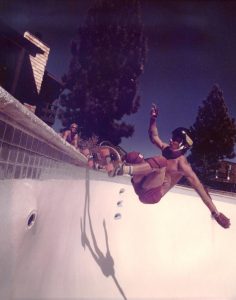
mcl-mammothThe students explored California through places and bioregions, individual histories and collective narratives of identity and culture, ideals, and representations. Students explored the historical myth and material reality of the Golden State through indigenous cultures and narratives of exploration; waves of immigration and demographic change; the presence of racism and multicultural history and identity; water, orange groves, and agribusiness; cities and suburbia; political corruption and capital crimes; money and Hollywood moguls; technological booms and busts; film, fiction, and fashion; popular music and poetry; sex, drugs, rock and roll; narratives of self-actualization and alienation; the emergence of surfing and skateboarding; skiing, mountaineering, and rock climbing; television, sports, and celebrity culture.

Their research projects—their answers to the question, “What is California?”—offers evidence of the generative intellectual work that is possible in the open, even in a first-year college course.

5

This summer I spent a week in Asheville, North Carolina at a course development workshop in preparation for co-teaching a multi-campus, team-taught, distance seminar in digital scholarship with professor of English Cole Woodcox from Truman State University.
img_0824

Public Access and the Liberal Arts: A Narrative History, or NAPLA, is funded by the Council of Public Liberal Arts (COPLAC), with support from the Executive Director of COPLAC, William Spellman. The course idea emerged a year earlier in a COPLAC Digital Humanities Workshop at the University of Mary Washington that brought together faculty from Keene State College, Sonoma State, University of Montevallo, USC Aiken, Midwestern State, and Truman State to design distance-learning, digital humanities courses.
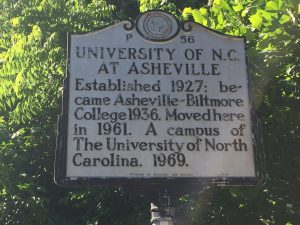
img_0836Our digital humanities project is documenting the emergence of the public liberal arts. Similar to the Story Corps project started in 2003, the course is about digital storytelling and the narratives of selected COPLAC institutions. Students are capturing the stories and life experiences of students, alumni, staff and faculty, and constructing a digital resource that captures the history and the prospects of the public liberal arts. As designers and editors of the digital archives, students are deepening their own sense of place in higher education and making visible the history of the liberal arts at the institution in which they are studying.
img_0837Our primary course objective is for teams enrolled at COPLAC campuses to research and represent the histories of their local campus. The context for this research will be the 1944 G.I. Bill and public access to higher education and, later, increased public access to liberal arts education. The objectives of the course are to 1) build an online archive of oral histories by alumni, faculty, staff and current students; 2) use digital tools to produce a layered, web-based narrative that includes audio and video stories, images, maps and documentary evidence of their home campus and 3) collaborate with faculty mentors to integrate their web site projects with a main COPLAC site to make visible the story of the public liberal arts. Our vision for this public storytelling project is to offer a digital resource for current students, alumni, educators, administrators, development and admission offices, historians, archivists, and the public in general.
img_0833

Interested in knowing more? Visit the NAPLA Course Site to check in on the action. I’ll also be sharing more here as we get further along in the course.